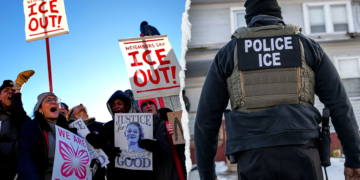























Minnesota Court Denies Request to Halt ICE’s Operation Metro Surge
A federal judge has rejected Minnesota’s plea to stop the U.S. Immigration and Customs Enforcement (ICE) operation known as Metro Surge. This decision allows federal enforcement activities to continue amidst rising tensions and public scrutiny surrounding immigration enforcement in the state.
Why It Matters
The ruling marks a critical moment in the ongoing debate over federal immigration tactics, particularly in a state where local leaders have openly opposed such enforcement actions. With Operation Metro Surge resulting in thousands of arrests, the court’s decision underscores the significant challenge states face when contesting federal law enforcement initiatives.
Key Developments
- U.S. District Judge Katherine Menendez ruled that Minnesota and two cities did not meet the necessary criteria for a preliminary injunction.
- The state, alongside Minneapolis and St. Paul, filed a lawsuit against the Department of Homeland Security (DHS) and other federal officials aimed at blocking the operation.
- The ICE-led Metro Surge initiative has reportedly resulted in around 3,000 arrests since its inception in December 2025.
- High-profile incidents, including the deaths of individuals during raids, have intensified public opposition to federal immigration enforcement.
Full Report
Court Decision
Judge Menendez’s ruling stated that the plaintiffs—Minnesota, Minneapolis, and St. Paul—had not demonstrated the burden required to grant a preliminary injunction. This legal decision allows ICE’s activities to persist as litigation continues. The ruling highlights the stringent legal standards necessary for blocking federal law enforcement operations.
ICE’s Operation Metro Surge
Launched in December 2025, Operation Metro Surge deployed thousands of immigration enforcement agents to Minnesota’s Twin Cities. The DHS described the operation as targeting "criminal illegal aliens," including individuals with histories of sexual offenses, violent crimes, and drug trafficking. Since its rollout, the operation has sparked significant conversations about the tactics employed by ICE, especially following several tragic incidents related to arrests.
Responses from Officials
Following the ruling, Tom Homan, the White House “border czar,” visited Minnesota and met with local leaders like Governor Tim Walz. Homan aimed to clarify the administration’s position on immigration reforms, dismissing assertions that President Trump’s administration was scaling back its commitment to rigorous immigration enforcement. He emphasized that the ongoing operation is part of a firm stance against illegal immigration.
Context & Previous Events
Operation Metro Surge has become a focal point in the state’s growing opposition to federal immigration measures. The initiative faced challenges not only due to its enforcement tactics but also as a result of tragic events, such as the deaths of Renée Good and Alex Pretti, which have further fueled public concern and protest against ICE’s actions.






