






















Jellycat Toys Capture Comfort in China’s Youth Market
The rise of Jellycat plush toys has become a notable phenomenon among young adults in China, offering emotional solace amidst an uncertain economy. Initially designed for children, these whimsical toys have now garnered a significant following among millennials and Gen-Z, highlighting a shift in consumer behavior and emotional needs amid societal complexities.
Why It Matters
The popularity of Jellycat toys underscores a broader trend where young adults are gravitating toward comfort items as they navigate turbulent economic conditions. In a country where youth unemployment remains high, the appeal of these plush toys offers not just nostalgia but also a sense of emotional companionship, making them a unique cultural emblem for disenchanted youth.
Key Developments
- Rising Popularity: Jellycat’s sales in China soared to an estimated $117 million, reflecting the brand’s increasing impact on the collectable-toy market.
- Emotional Connection: Plush toys are leveraged by young adults for emotional regulation, serving as a form of comfort during difficult times.
- Innovative Marketing: The company has employed "hunger marketing" strategies to boost interest, facilitating limited-edition releases that enhance social media engagement.
- Cultural Moments: The toys have become a canvas for self-expression, with fans creatively altering their plushies and sharing their experiences on social platforms like RedNote.
Full Report
Emotional Anchors in Uncertain Times
Stella Huang, a 32-year-old sales manager in Beijing, first encountered Jellycat toys during the pandemic after losing her job. She purchased her initial plushie, a whimsical gingerbread house, after being inspired by social media. Since then, her collection has expanded to 120 toys, costing approximately $5,145. Huang finds solace in her plush toys, stating, “At my age, there are many things you can’t share with others… and the troubles we face are a lot more complicated than before.”
The growing affinity for Jellycat toys aligns with the emotional needs of a generation facing job instability and economic uncertainty. Market analyst Kasia Davies notes the toys resonate particularly well with a wide-ranging audience, helping to fill a void for companionship.
The Appeal of Amuseables
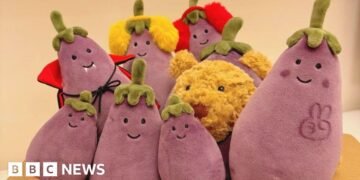
Jellycat’s “Amuseables” line features plushies modeled after inspired everyday items, from food to household objects. The brand’s ability to tap into the millennial and Gen-Z markets has been a critical strategy since its early entrance into China in 2015. Kathryn Read, a business consultant with extensive experience in the Chinese market, remarks that Jellycat effectively captured the “tone of the pandemic,” positioning itself as a source of comfort during turbulent times.
Strategic Marketing and Local Adaptation
Jellycat’s marketing strategies include pop-up events and localized products that resonate with the cultural fabric of China. Temporary shops in major cities like Shanghai and Beijing have featured exclusive plushies themed around popular local foods, appealing to both nostalgia and novelty. The recent partnership with actress Yang Mi further amplified the brand’s visibility among younger audiences.
Such initiatives have contributed to a staggering revenue increase of two-thirds to £333 million ($459 million) in 2024, demonstrating the viability of targeting adult collectors amidst declining birth rates globally.
Collectible Culture and Economic Reflection
While the accessories market is projected to grow, many young consumers are discovering the joy of collectable toys as an affordable luxury. High-value plushies, sometimes reselling for over $1,400, coexist alongside more economical options that serve as quick emotional fixes during tough economic conditions.
Jessie Chen, a 34-year-old medical sales representative, explains that purchasing a Jellycat is much simpler than investing in more expensive luxury items. “You have to consider for a long time before buying a luxury bag. But you don’t need to do that for a Jellycat.”
Evolving Trends
However, as the market becomes saturated, concerns about Jellycat’s longevity have emerged. Some fans, like Wendy Hui from Hong Kong, have begun seeking newer, more thrilling alternatives, including "blind boxes" that offer surprise toys.
“The daily life is not easy already; why should we make things harder for ourselves?” Hui questions, reflecting a broader sentiment among consumers who are reassessing their affections for collectible items amid economic realities.
Context & Previous Events
Since its introduction to China in 2015, Jellycat has steadily increased its footprint in the collectible-toy market. Its expansion coincided with economic trials faced by the younger population, paving the way for plush toys to become not just playthings but instruments of resilience during the pandemic and into a fragile economy. The advent of the “kidult” trend has further solidified the role of collectable toys in adults’ lives across various cultures, questioning historical definitions of adulthood.