























Japan Suspends Operations at Largest Nuclear Plant After Restart Alarm
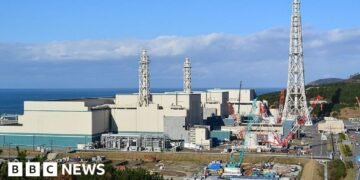
Japan has halted operations at the Kashiwazaki-Kariwa nuclear power plant, the world’s largest, just hours after it was restarted. The decision follows an alarm during the initial reactor start-up, raising safety concerns in a nation that is still grappling with the aftermath of the 2011 Fukushima disaster.
Why It Matters
This suspension underscores the ongoing struggle Japan faces with its nuclear energy program, which was a critical part of its energy strategy before the Fukushima meltdown. As Japan aims for net zero emissions by 2050, the fate of its nuclear facilities remains a contentious issue, reflecting both public apprehension and government ambitions.
Key Developments
- Kashiwazaki-Kariwa’s reactor number six experienced an alarm during start-up procedures but remained stable, according to Tokyo Electric Power Company (Tepco) spokesperson Takashi Kobayashi.
- The reactor was initially set to restart on Tuesday, but a technical issue delayed its activation until Wednesday.
- This reactor is the first to resume operation since the Fukushima incident, which led to a complete shutdown of Japan’s 54 nuclear reactors.
- Kobayashi confirmed that there is no radioactive impact outside following the reactor’s suspension, but he did not provide a timeline for when operations might resume.
- Protests against the restart occurred outside Tepco’s headquarters and regional governmental offices, highlighting public concerns over nuclear safety.
Full Report
Recent Developments
After an alarm sounded during the start-up of reactor number six, Kashiwazaki-Kariwa’s operations were suspended. Officials from Tepco claim the reactor remains stable, with no signs of radioactive leaks to the surrounding environment. The restart had originally been scheduled for Tuesday but was postponed due to the alarm malfunction. The reactor is set to begin commercial operations next month, pending safety checks and investigations into the cause of the alarm.
Fear and Protests
Local residents have expressed fears about the safety of nuclear energy following the catastrophic events of the Fukushima disaster, which was triggered by a 9.0 magnitude earthquake. Despite the government’s reassurances that the reactor meets safety standards, a small protest occurred last week outside Tepco’s headquarters and larger demonstrations have taken place in front of local government buildings. Many residents remain wary, and rights groups continue to advocate against the reliance on nuclear power.
Future of Japanese Nuclear Energy
The seventh reactor at the Kashiwazaki-Kariwa plant is not slated for operation until 2030, while the future of the remaining five reactors is uncertain, with potential plans for decommissioning. Before the 2011 disaster, nuclear power provided nearly 30% of Japan’s electricity, with aspirations to increase that number to 50% by 2030.
Context & Previous Events
Following the Fukushima disaster, Japan ceased operations at all of its nuclear power facilities, with more than 150,000 people displaced due to radiation concerns. The government has been working over the past decade to gradually reinstate nuclear energy as part of its strategy for sustainable energy and reaching carbon neutrality by 2050. Since 2015, 15 of Japan’s 33 operable reactors have been restarted.