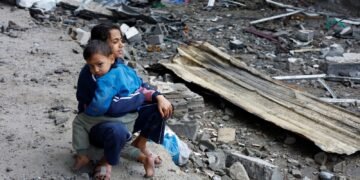























Israeli Strikes Result in Civilian Casualties Amid Ongoing Conflict
Israeli airstrikes in Gaza have claimed the lives of at least 13 individuals, including four children, according to health officials in the region. This escalation underscores the ongoing hostilities as tensions remain high in the conflict-ridden area.
While these military actions are framed by Israel as retaliatory strikes against Hamas militants, the human toll raises critical questions about the impact on civilian life amidst the conflict. The situation continues to deteriorate as diplomatic efforts for a lasting ceasefire increasingly face obstacles.
Key Developments
- Israeli military airstrikes on Thursday resulted in the deaths of at least 13 people, including four children.
- These strikes targeted what Israel described as "terror infrastructure" linked to Hamas and were conducted in response to a failed rocket attack.
- The U.S. government indicates a lack of progress on multiple fronts relating to peace negotiations and the rebuilding of Gaza, even as former President Donald Trump prepares to announce a governing board to facilitate these efforts.
- Both Israel and Hamas accuse each other of violating the ceasefire agreement, which was established on October 10, 2023.
- The latest figures from Gaza’s health ministry report significant casualties, with over 71,000 Palestinians reportedly killed since the beginning of the conflict on October 7, 2023.
Full Report
Civilian Impact of Strikes
The Israeli military asserts that its airstrikes were specifically aimed at Hamas fighters and infrastructure in the Gaza region. However, local health officials have reported that strikes across northern Gaza and east of Gaza City resulted in multiple civilian casualties. Details regarding the strikes emphasize the precarious situation for civilians caught in the crossfire.
Diplomatic Efforts for a Ceasefire
As hostilities continue, former President Trump is expected to announce new members of a "Board of Peace." This board aims to oversee a phased ceasefire between Israel and Hamas, which remains in the early stages of implementation. The board’s mandate includes the creation of a new Palestinian government, disarmament of Hamas, and the establishment of an international security force.
Despite these plans, the U.S. reports limited advancements in achieving these objectives. Concerns are mounting as both parties clash over alleged violations of the current ceasefire, with Gaza officials stating that Israeli actions have resulted in over 400 deaths since the agreement began.
Escalation of Violence
The conflict, which ignited on October 7, 2023, has led to significant losses on both sides, including the deaths of approximately 1,200 people in the initial Hamas assault. The situation is further complicated by ongoing negotiations for the release of hostages, as Israel awaits the return of final hostages, fueling tensions over the timeline for a more extensive cessation of hostilities.
Context & Previous Events
The recent round of violence began on October 7, 2023, when Hamas launched an attack that resulted in the deaths of around 1,200 people, predominantly civilians. This attack was accompanied by the abduction of 251 individuals, which has added urgency to diplomatic conversations surrounding a ceasefire. Under the current ceasefire agreement, Hamas is expected to release remaining hostages while Israel is assessing the precise conditions for further military de-escalation.
The dynamics of the conflict continue to evolve, with both sides firmly entrenched in their positions, making resolution increasingly challenging.