






















Israel Recognizes Somaliland as Independent Nation in Groundbreaking Move
Israel has officially recognized Somaliland as an independent nation, marking a historic shift in diplomatic relations in the Horn of Africa. Prime Minister Benjamin Netanyahu announced plans for enhanced cooperation in agriculture, health, and technology, highlighting the significance of this recognition for both Somaliland and Israel.
Why It Matters
This recognition by Israel could set a precedent that encourages other nations to acknowledge Somaliland’s sovereignty, significantly affecting its diplomatic relations and economic opportunities. Conversely, the announcement has drawn sharp condemnation from Somalia and neighboring countries, who reject the move as a threat to regional stability and territorial integrity.
Key Developments
- Israel becomes the first country to formally recognize Somaliland’s independence.
- Israeli Prime Minister Netanyahu announced intentions to expand cooperation across various sectors.
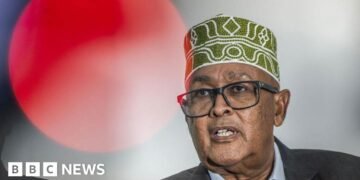
- Somaliland’s President Abdirahman Mohamed Abdullahi described the declaration as "historic" and plans for engagement in the Abraham Accords.
- Somalia, Egypt, Turkey, and Djibouti issued a joint statement denouncing Israel’s recognition and emphasizing their support for Somalia’s unity and sovereignty.
- Israeli Foreign Minister Gideon Saar confirmed the establishment of full diplomatic ties, including the appointment of ambassadors and opening of embassies.
Full Report
Diplomatic Relations Strengthened
Following the announcement, Israel expressed its commitment to deepen ties with Somaliland through various collaborative initiatives. Netanyahu’s administration indicated that efforts would focus on agriculture, health care, and technology. The recognition signals a potential shift in international support for Somaliland, which has been striving for global acknowledgment since declaring independence from Somalia in 1991.
President Abdullahi welcomed the development as a pathway toward enhancing peace in the region. He affirmed Somaliland’s aspirations to join the Abraham Accords, which seek to normalize relations between Israel and various Arab states.
Reactions from Neighboring Nations
In response to Israel’s recognition, foreign ministers from Somalia, Egypt, Turkey, and Djibouti quickly condemned the move. They reiterated their "total rejection" of Israel’s claims and emphasized their commitment to Somalia’s territorial integrity. The ministers warned that any unilateral actions could jeopardize stability and create "parallel entities" threatening Somalia’s governance.
Egypt’s foreign minister engaged in discussions with counterparts in the region to reinforce collective support for Somalia’s sovereignty. Their statement also raised concerns about potential implications for international law and the plight of the Palestinian people.
Context & Previous Events
Somaliland declared independence from Somalia in 1991 following years of conflict but has struggled for recognition as a sovereign state. The region has established its own governing institutions, currency, and security forces, yet remains internationally unrecognized. Prior regional tensions have included disputes with Somalia over territory and agreements with Ethiopia concerning strategic coastal access, further complicating Somaliland’s diplomatic landscape.
Israel has been working to improve relations with countries across the Middle East and Africa, driven by historical agreements like the Abraham Accords initiated during President Donald Trump’s administration. This recent recognition could reshape the dynamics within the region as nations reassess their diplomatic stances.