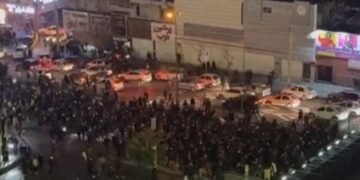























Iran’s Supreme Leader Threatens Crackdown as Protests Erupt Nationwide
Iran’s Supreme Leader has hinted at a potential crackdown against escalating protests, with officials warning some demonstrators may face the death penalty. This comes as former President Donald Trump expressed support for the protesters, stating the U.S. would intervene if the Iranian government resorted to lethal force against its citizens.
Why It Matters
The protests, originally ignited by a faltering economy, mark a significant increase in public dissent against the Iranian regime. As demonstrations spread across the country, the government’s response could have grave implications not only for internal stability but also for international relations and human rights in the region.
Key Developments
- Supreme Leader Ayatollah Ali Khamenei condemned protesters, accusing them of acting on behalf of external enemies, specifically the U.S. and Israel.
- Tehran’s Prosecutor Ali Salehi announced that certain acts committed during protests could be classified as "moharebeh," or waging war against God, and could result in execution.
- Reports indicate at least 62 individuals have died amid the unrest, with over 2,300 detained, according to a U.S.-based human rights agency.
- An internet blackout has been imposed nationwide, limiting communication and coordinating ability among protesters.
- Trump has urged a strong U.S. response should Iran resort to violence against demonstrators, suggesting a severe economic impact instead of military intervention.
Full Report
Increasing Unrest
Protests began last month in Tehran, fueled by the sharp decline in the value of the rial. This dissent quickly expanded into a nationwide movement challenging the government’s authority, which many citizens blame for their economic hardships.
Government’s Response
Khamenei characterized the demonstrators as "vandals and rioters," claiming they were working against Iranian interests to please the President of another country. He asserted that the government would not tolerate individuals acting as "mercenaries for foreigners." In a similar tone, Salehi warned that those who engage in vandalism could face the death penalty under the charge of moharebeh. The prosecutor emphasized a zero-tolerance approach toward armed dissent.
Internet Blackout and International Reaction
To suppress the protests, the Iranian government has imposed a nationwide internet blackout, which has also affected international communications. This action has drawn condemnation from international leaders, including a joint statement from the UK, France, and Germany, expressing deep concern over the violence against protesters. Additionally, the United Nations has voiced its distress regarding the reported fatalities and violence occurring in Iran.
Comments from Former President Trump
During a press briefing, Trump acknowledged the protests, stating they indicated significant trouble for the Iranian regime. He suggested that should Tehran employ lethal force against its citizens, the U.S. would take serious action, emphasizing economic measures rather than military intervention. He further speculated that Khamenei may be considering leaving Iran, due to the escalating situation.
Call from Exiled Crown Prince
Reza Pahlavi, the exiled crown prince of Iran, has called for mass protests, urging Iranians to unite for their freedom. He emphasized that the international spotlight is on Iran and called for citizens to take action against the regime.
Context & Previous Events
The current wave of protests represents the most significant challenge to the Iranian government since the 1979 revolution. Prior demonstrations were often met with severe crackdowns, leading to heightened international scrutiny and condemnation from human rights organizations. The economic crisis, largely attributed to sanctions and mismanagement, has exacerbated public discontent, fueling the ongoing unrest.