






















Escalating Tensions: Iran Warns of "Regional War" Amid U.S. Military Presence
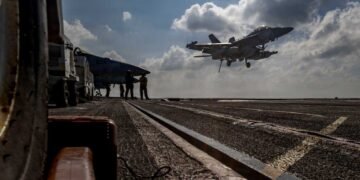
Iran’s Supreme Leader Ayatollah Ali Khamenei has issued a stark warning to the United States, stating that any military action against Iran would ignite a "regional war." His comments come as the USS Abraham Lincoln and accompanying American warships are strategically positioned in the Arabian Sea, heightening fears of a potential conflict amid rising tensions over Iran’s internal unrest and its crackdown on protests.
Why It Matters
The exchange of threats between Iran and the United States signifies a precarious moment in Middle Eastern geopolitics. Both nations are navigating a complex landscape marked by Tehran’s internal dissent and ongoing concerns regarding its nuclear program. Khamenei’s remarks suggest an unwillingness to back down, while U.S. President Donald Trump’s military posturing raises the stakes for both nations, which could plunge the region into chaos.
Key Developments
- Khamenei proclaimed that any U.S. attack would result in a regional conflict, urging caution from American forces.
- He described the recent nationwide protests within Iran as a "coup," noting that tens of thousands have been detained since their onset.
- The Iranian military has planned a live-fire drill in the strategic Strait of Hormuz, a critical route for global oil shipments.
- Iran’s parliament speaker declared all European Union militaries as terrorist groups in response to the EU’s designation of the Revolutionary Guard as a terror organization.
- Trump has articulated two key red lines concerning military action: the killing of non-violent protesters and potential mass executions among detainees.
Full Report
Khamenei’s Defiant Stance
During a public address, Khamenei emphasized that Iran does not seek conflict but will retaliate strongly against any aggressor. He characterized the recent protests, sparked by economic discontent, as undermining national stability and stated they aimed to dismantle essential state institutions. The response to the demonstrations has led to severe government crackdowns, raising international concerns about human rights violations.
U.S. Military Posturing
The USS Abraham Lincoln and its escorts were sent to the region amid escalating tensions following Iran’s violent suppression of protests. Although President Trump has indicated a willingness to negotiate over Iran’s nuclear ambitions, he has also maintained a military presence as leverage in negotiations.
Iran’s Military Response
In conjunction with sabre-rattling from Washington, Iran announced its intentions to conduct military exercises in the Strait of Hormuz. The U.S. Central Command has warned against any actions that may threaten American assets or disrupt international commerce in the crucial waterway.
Domestic Reactions
In response to foreign pressures, Iranian lawmakers rallied in support of the Revolutionary Guard, donning uniforms to signify solidarity. Their vehement rhetoric included chants of "Death to America!" and "Death to Israel!" signaling a deep-rooted animosity towards Western nations perceived as adversaries.
Context & Previous Events
The tensions stem from a series of demonstrations that began in late December 2025, initially focusing on economic issues tied to the collapse of Iran’s currency. The protests evolved into larger anti-government sentiments posing a direct challenge to Khamenei’s authority. Following declarations of the Revolutionary Guard as a terror organization by the EU, Iranian officials have retaliated with similar designations of their own, reflecting a growing cycle of hostility between the involved parties.
In recent months, Trump has pointed to Iran’s nuclear program as a critical concern while refraining from committing to military action, despite warning signs that the situation might spiral further.






