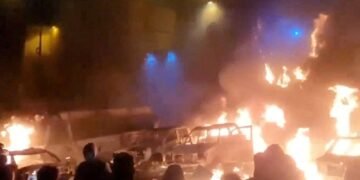























Unrest in Iran Escalates Amidst Crackdown Measures
Recent protests sweeping across Iran are intensifying, yet the regime’s response is tightening as authorities leverage their control over communication to stifle dissent. The situation reflects a recurring cycle of unrest spurred by various grievances, raising questions about the possibility of meaningful change in a country long dominated by repression.
Why It Matters
The current wave of protests is significant not just for its immediate implications but also for the underlying factors that drive them. Previous uprisings in 2009, 2019, and 2022 highlight the persistent frustrations among the Iranian populace, from electoral misconduct to economic hardships. As protests grow in volatility, the regime’s increasingly draconian measures may risk igniting deeper unrest—the stakes for both the government and its citizens have never been higher.
Key Developments
- Spirit of protest seen across Iran’s 31 provinces, fueled by longstanding grievances.
- Communication blackouts make organizing and sustaining protests increasingly challenging.
- Authorities utilize state media to promote a narrative that paints protesters as "vandals" and "terrorists."
- Calls for action from exiled figures, such as Reza Pahlavi, struggle to gain traction within Iran.
- Economic pressure on the regime limits its ability to maintain tight controls indefinitely.
Full Report
Communication Blackout Challenges Protests
The Iranian government has enacted widespread shutdowns of internet access, leaving citizens unable to coordinate protests or share information. This blackout significantly hampers the momentum of protests, which had previously been successfully mobilized through social media and other forms of communication. With people unable to gauge public sentiment, the desire to resist may wane.
State Repression and Justification
Authorities have repeatedly demonstrated a willingness to utilize force against demonstrators, implementing tactics such as mass arrests, public executions, and interference with civil liberties. These measures, combined with state-controlled media narratives depicting protesters in a negative light, create an atmosphere of fear and uncertainty.
Economic Implications of Repression
Crackdowns may exacerbate existing economic distress in Iran. The governance techniques employed by the regime risk further destabilizing an already fragile economy, which may, over time, limit the extent of the state’s repressive abilities. Prolonged unrest could lead to increased demands for reform and change from a population that is increasingly restless.
Potential International Response
As the situation escalates, responses from outside actors may play a role in shaping the dynamics. Former U.S. President Donald Trump has cautioned that any violent response to protesters could invoke serious consequences for Iran, suggesting heightened tensions internationally. Additionally, Israel’s potential involvement adds another layer of complexity to the situation.
Context & Previous Events
The current unrest follows a historical pattern of protests in Iran, with significant outbursts recorded in 2009 after allegations of electoral fraud, in 2019 over rising fuel prices, and in 2022 in response to the oppressive measures implemented by the morality police. Each instance has been met with severe crackdowns, including deadly force, highlighting the regime’s unwavering grip on power despite widespread discontent.
As Iran grapples with its internal challenges, the potential for reforms or revolutions remains uncertain. The decision of key security officials to continue supporting the supreme leader will be a critical factor in determining the outcome of these protests.