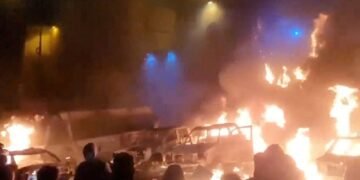























Iran’s Protests Escalate Amid Economic Turmoil and Calls for Regime Change
Protests are erupting across Iran as millions unite in a growing movement against the Islamic Republic and its leader, Ayatollah Khamenei. Triggered by severe economic distress, demonstrators from various sectors are increasingly voicing their discontent, signaling a significant challenge to the regime’s authority.
Why It Matters
The current unrest in Iran highlights a critical moment in the nation’s history, as citizens express widespread frustration over economic hardships and governmental oppression. This collective action poses the most substantial threat to the ruling regime since the 1979 Iranian Revolution, potentially reshaping the country’s political landscape.
Key Developments
- Initial protests began two weeks ago among shopkeepers over skyrocketing inflation and currency collapse, resulting in soaring prices for essential goods like rice and bread.
- Demonstrations have since expanded to include a diverse range of participants from all walks of life across the country.
- The Iranian government has imposed a communications blackout affecting both internet and phone services to quell the unrest.
- Supreme Leader Khamenei has labeled protesters as “mercenaries” working for foreign interests, notably the U.S., amidst fears for his grip on power.
- Tehran’s prosecutor indicated that those arrested could face severe consequences, including charges of waging war against God, raising concerns of increased violence.
Full Report
Economic Grievances Spark Outrage
The demonstrations were initially sparked by shopkeepers voicing frustration over the deteriorating economy, with rampant inflation and a collapsing currency deeply affecting daily life. Essential food prices have risen dramatically, further fueling public outrage.
A Broad Coalition of Protesters
As anger surged, the protests evolved, drawing individuals from various backgrounds and regions. Historian Arash Azizi noted the widespread discontent with the current regime, stating that the populace is exhausted by the government’s failure to meet basic societal expectations.
Government’s Response and Communication Blackout
In a bid to suppress the demonstrations, the Iranian government has initiated a communications blackout, limiting access to the internet and phone services. This move has left many Iranians reliant on state-run media, which perpetuates a narrative suggesting that the protests are driven by a small group of anti-revolutionaries.
Leadership’s Fears and Potential Outcomes
As Khamenei publicly denounced the protests, his remarks reflected both defiance and concern. Officials are particularly wary of employing excessive force, with President Trump having previously suggested potential military responses. However, yielding to protesters could further embolden dissent, as the fear that once quelled protests appears largely diminished.
Context & Previous Events
Since the 1979 Iranian Revolution, citizens have faced ongoing repression under the current regime, which has often stifled cultural expression and personal freedoms. The economic situation has progressively worsened over recent years, culminating in the current widespread protests.