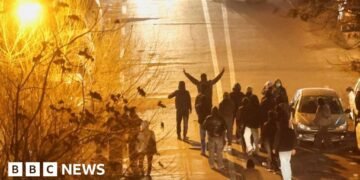























Iran Faces Unprecedented Crackdown Amidst Unrest
Iran’s government is grappling with significant internal unrest, the most severe since the 1979 revolution. In response, authorities have initiated a nationwide crackdown and imposed extensive internet restrictions, aiming to quell the escalating protests that have characterized recent weeks.
Why It Matters
The current turmoil not only threatens the stability of the Iranian regime but also poses broader implications for the Middle East. As external pressures rise, particularly from the U.S. and Israel, the internal dissent highlights the regime’s precarious grip on power, raising concerns about potential escalations in violence and international conflict.
Key Developments
- A stringent security crackdown is underway, complemented by a near-total communications blackout.
- Reports indicate a sharp decline in protest activity in Tehran, with many residents expressing fear of repercussions for participating.
- Iranian officials, including Foreign Minister Abbas Araghchi, assert that the situation is "under total control," despite evidence of violence against civilians.
- The death toll from recent protests has reportedly exceeded previous unrest, with human rights groups estimating over 20,000 arrests.
- Historical grievances over economic mismanagement and restrictions on freedom appear to fuel current frustrations.
Full Report
Severe Repression in Response to Protests
Authorities have reacted with unprecedented force to quell recent demonstrations, which started following a sudden currency collapse in late December. Reports indicate that streets that once reverberated with protests are now eerily quiet. One resident described the drastic change from an incredibly crowded scene filled with unrest on Friday to a subdued and almost deserted environment by Saturday.
An Iranian journalist remarked on the climate of fear, saying, “You would have to have a death wish to go out now.” Despite this crackdown, videos and communications from within Iran reveal a grim reality: hospitals are overwhelmed with casualties, and reports of makeshift mortuaries are surfacing.
Government’s Stance
Iran’s leaders show no inclination to alter their autocratic course, choosing instead to assert control. While government propaganda blames foreign enemies, particularly the U.S. and Israel, for the protests, there’s a palpable sentiment of dissatisfaction among citizens stemming from years of economic hardship and restricted freedoms.
The Iranian government maintains that these protests result from foreign interference, particularly from Israel’s Mossad, heightening the atmosphere of conspiracy. Notably, legal consequences for demonstrators have escalated, with harsh penalties proposed, including the death penalty for those labeled as "vandals."
Economic Pressures Exacerbate Unrest
The uprising began among traders reacting to the Iranian rial’s drastic depreciation. This sparked immediate strikes, prompting the government to promise dialogue and introduce a minor financial aid measure. However, soaring inflation negated any relief this allowance could offer, leading to growing discontent and expanding protests.
The weakness of the Iranian system is evident, with rampant financial mismanagement and pervasive corruption contributing to public outrage. Although the ruling elite remains unified, the tension within its ranks concerning dealings with the U.S. and Israel continues to simmer.
The Role of External Influences
U.S. President Trump has intensified tensions by hinting at possible military actions against Iran. His comments have both alarmed and galvanised various factions within Iran, as speculation grows about how external military intervention could impact the already fraught internal situation. Iranian exiles like Reza Pahlavi have called for U.S. involvement in the unrest, creating additional complexities.
Voices for Change
Calls for change within Iran come from various factions, including notable figures like Nobel laureate Narges Mohammadi, who argue that meaningful reform must originate from within the country. As protests grow in scope, symbols of pre-revolutionary Iran have resurfaced, signaling a yearning for a different future.
Context & Previous Events
This wave of unrest follows significant civil disturbances in 2022 and 2023, during which around 500 deaths were recorded and over 20,000 people were arrested. These previous protests themselves were a response to economic hardships exacerbated by U.S. sanctions and mismanagement.
The Iranian regime has faced pressing external threats, particularly following military conflicts in the region, which have left its standing weakened. As the current crisis unfolds, the stakes for both the regime and those seeking change appear precariously high.