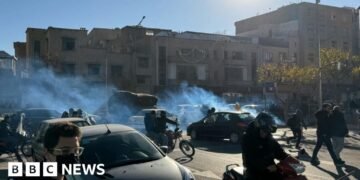























Escalating Tensions: Protests Erupt Across Iran Amid U.S. Commentary
Recent protests in Iran, sparked by economic discontent and government policies, have drawn a stern warning from President Donald Trump, further straining U.S.-Iran relations. As unrest spreads across several cities, the Iranian government is facing both internal dissent and external scrutiny.
Why It Matters
The protests in Iran coincide with significant economic challenges and discontent over the government’s handling of currency depreciation. Trump’s interventionist rhetoric complicates the situation, as it raises the stakes for Tehran, potentially influencing how the authorities respond to demonstrators while also impacting international diplomatic relations. With Iran’s history of harsh crackdowns on dissent, the situation poses risks of further violence and instability in the region.
Key Developments
- Protests erupted across multiple Iranian cities, beginning with shopkeepers in Tehran frustrated by the falling value of the national currency.
- At least eight individuals have lost their lives during the week-long protests, with most fatalities occurring during clashes between protestors and security forces.
- President Trump stated that the U.S. is “locked and loaded” to assist peaceful demonstrators, prompting a harsh response from Iranian officials.
- Iran’s Foreign Affairs Minister condemned Trump’s comments as “reckless and dangerous,” emphasizing that Iran will not tolerate foreign interference.
- The Iranian Prosecutor-General warned against any attempts to create instability, vowing a decisive response to unrest.
Full Report
Protests and Violence
The protests began in Tehran, initiated by shopkeepers reacting to a dramatic plunge in the Iranian currency against the U.S. dollar. As the unrest grew, university students joined the demonstrations, which quickly spread to cities like Lordegan, Azna, and Kouhdasht. Reports indicate various fatalities, including two protesters named Ahmad Jalil and Sajjad Valamanesh in Lordegan, as well as other casualties in different western cities. The BBC has not independently verified these accounts.
Government Response and International Reactions
In response to the unrest, Iranian authorities have asserted their commitment to maintaining order. An Iranian police spokesman indicated that they would not allow “enemies” to exploit the unrest. President Masoud Pezeshkian expressed a willingness to address the “legitimate demands” of those protesting. Conversely, the Prosecutor-General issued a stark warning to those seeking to instigate instability.
Following Trump’s remarks, Iran’s UN Ambassador Amir-Saeid Iravani called for condemnation of the U.S. President’s statements, asserting that the U.S. bears responsibility for any escalation resulting from perceived threats.
Context & Previous Events
The current demonstrations are reminiscent of the widespread protests in 2022 triggered by the death of Mahsa Amini, who died in police custody after an accusation regarding her veiling. While this latest wave of protests has not reached the same intensity as those in 2022, they mark a significant expression of public dissent in Iran.