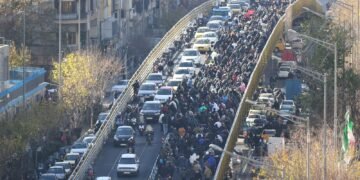























University Students Join Growing Protests Over Rising Costs in Iran
Protests in Iran are escalating as university students unite with shopkeepers and bazaar merchants to voice their frustrations over the steep cost of living. Demonstrations, particularly in Tehran, have drawn crowds chanting slogans and expressing discontent over economic conditions exacerbated by international sanctions and inflation reaching alarming levels.
Why It Matters
The current wave of protests highlights the significant distress faced by many Iranians due to an economy in turmoil. Rising inflation has severely impacted daily life, prompting citizens to take to the streets for the first time since prior unrest. The government’s acknowledgment of these protests reflects the urgency of addressing widespread dissatisfaction amidst an economically strained populace.
Key Developments
- Hundreds of students protested at four universities in Tehran, echoing cries for economic reform.
- Footage from Tehran showed demonstrators chanting “rest in peace Reza Shah,” referencing the former monarch ousted during the 1979 Islamic Revolution.
- Iran’s currency, the rial, has depreciated significantly, losing nearly half its value against the US dollar in 2025.
- Inflation hit 42.5% in December, with food prices soaring by as much as 72%.
- President Masoud Pezeshkian has called on the interior minister to listen to the protesters’ “legitimate demands.”
- The government plans to establish a dialogue mechanism involving discussions with protest leaders.
- Widespread unrest follows aggressive airstrikes on Iranian military installations by the US and Israel earlier this year.
Full Report
Protests Erupt in the Capital
In recent days, protests have erupted across Tehran, with students and merchants joining forces to decry rising prices and deteriorating living conditions. Video footage captured demonstrators rallying in central areas, where they voiced discontent and chanted well-known slogans. The protests mark a notable moment, as they are the first significant displays of dissent following military action from foreign powers that affected Iran this past June.
Government Response
Following the protests, the Iranian government has signaled its intent to engage with the grievances voiced by the citizens. President Masoud Pezeshkian announced that he had requested the interior minister to address the “legitimate demands” of the protesters. A government spokesperson indicated that a dialogue mechanism would be put in place to facilitate conversations with protest leaders, demonstrating an acknowledgment of the economic pressures impacting the populace.
Economic Pressures
The Iranian economy continues to suffer from long-standing issues, largely stemming from sanctions imposed by the United States since 2018, which have compounded inflationary pressures. Since December, food prices have surged dramatically, pushing many necessities beyond the reach of average citizens. The local currency’s steep decline further exacerbates the situation, making it increasingly difficult for families to make ends meet.
Context & Previous Events
These protests come in the wake of previous unrest in 2022, which was sparked by significant price hikes, including for basic staples like bread. The country was also shaken by protests related to the tragic death of Mahsa Amini, a young woman whose detention by the morality police led to widespread calls for reform and accountability. The current economic challenges have reignited frustration among the population, leading to a resurgence of protests across the nation.