






















Tensions Rise as Mural in Tehran Warns Against US Military Action
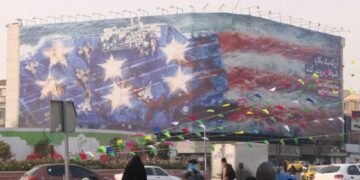
Tensions between the United States and Iran have escalated following the unveiling of a provocative mural in central Tehran, warning against a potential US military strike. The mural, which depicts damaged aircraft on the deck of an aircraft carrier alongside the phrase “If you sow the wind, you will reap the whirlwind” in both Farsi and English, symbolizes Iran’s growing apprehension as US naval forces prepare to enter the region.
Why It Matters
This development highlights the fragile relationships in the Middle East and signals escalating tensions as the US amplifies its military presence while Iran braces for possible conflict. The warning from Iranian officials regarding any US actions is underscored by the recent movements of US aircraft carriers towards the region, raising fears of a military confrontation.
Key Developments
- The mural was unveiled in Enghelab Square, a location typically utilized for government-sanctioned gatherings.
- A senior Iranian official stated that any attack from the US would be treated as "an all-out war."
- President Trump confirmed the deployment of additional naval ships, which he referred to as a precautionary measure, indicating readiness for potential action.
- Trump has also highlighted the dire circumstances faced by Iranian protesters, although claims regarding the cessation of protests and executions have been met with denial from Iranian authorities.
Full Report
Unveiling of the Mural
In a significant act of defiance, a new mural has been introduced in Tehran’s Enghelab Square, aiming to remind the US of the consequences of military intervention. The imagery chosen reflects deep-seated fears and hostilities, illustrating devastation that could result from an attack. This decision coincides with the US’s recent military maneuvers, including the dispatch of the USS Abraham Lincoln and guided-missile destroyers to the area.
US Military Presence
President Trump acknowledged the movement of the US fleet, asserting it is a defensive step, should the situation escalate. He indicated that the buildup of naval assets might deter an actual conflict but also suggested that military options are still very much on the table. His remarks included a stark warning that any US military action could dwarf last year’s strikes on Iran’s nuclear sites.
Iran’s Reaction
In response to the increased tension, Iranian officials have issued stark warnings about the implications of a military strike, framing it as an existential threat. The assertion from the Iranian government that such actions would lead to an "all-out war" reflects the serious concerns over regional stability and security.
Context & Previous Events
This situation amplifies the already tense atmosphere in the Middle East, where the US military has periodically sent reinforcements during times of heightened conflict. Historically, such military buildups have often been viewed as preparations for potential strikes against Iranian interests, particularly in light of past actions targeting Iran’s nuclear program.