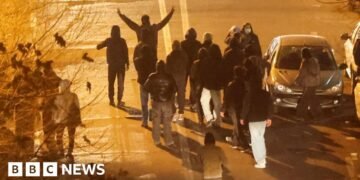























Escalating Violence in Iran Amidst Ongoing Protests
As protests in Iran’s capital of Tehran intensified over the weekend, authorities responded with deadly force, marking one of the most violent periods of unrest since the Islamic Republic’s inception. Eyewitness accounts reveal escalating violence and a reportedly high death toll amid government crackdowns focusing on dissent linked to economic hardship.
Why It Matters
The recent surge in protests reflects deep-seated frustrations among the Iranian populace, triggered by worsening economic conditions. The government’s lethal response has not only heightened tensions but also raised serious concerns regarding human rights violations and the suppression of free speech. As the number of casualties rises, international scrutiny on Iran’s handling of dissent increases, with implications for stability in the region.
Key Developments
- As of January 9, a human rights organization reports at least 6,159 confirmed deaths since protests began on December 28, including numerous civilians.
- Eyewitness accounts detail a stark escalation in violence from security forces, with many claiming to have witnessed live ammunition being used on protesters.
- Reports indicate that authorities have put pressure on families of deceased protesters to pay for their loved ones’ bodies, complicating the ongoing crisis.
- A communications blackout has hindered the flow of information, exacerbating fears and confusion among the Iranian public.
Full Report
Eyewitness Accounts of Violence
Various participants in the protests shared harrowing experiences from the streets of Tehran. Parisa, a 29-year-old resident, reported knowing at least 13 individuals who were killed as a result of the government’s crackdown. “In past protests, I didn’t know anyone who had been killed,” she stated. She described a chaotic scene on January 8, where a friend lost their life to "a hail of bullets in the street." Despite her participation being peaceful, she noted, “On Friday night, they still opened fire on the crowd.”
Echoing this sentiment, 24-year-old Mehdi recounted experiencing unprecedented voter turnout paired with brutal state violence. He witnessed multiple killings firsthand, including a young man shot just before his eyes. “People had nothing left to lose. They came out knowing the risks,” he said.
Rising Death Toll
According to the U.S.-based Human Rights Activists News Agency, the death toll could exceed 25,000, as numerous organizations, including Norway-based Iran Human Rights (IHR), continue to investigate reported deaths. Iranian officials indicated that more than 3,100 individuals had died, but attributed most of these to security personnel or bystanders harmed by rioters.
Government’s Response
Residents also highlighted alarming practices by Iranian authorities regarding the treatment of deceased protesters. Families are reportedly being faced with demands for payment to recover their loved ones’ bodies or pressured to falsely categorize them as members of the security forces to obscure actual death tolls. According to one source, families were told to pay over $7,000 for the return of their relatives.
Communications Blackout
The severely restricted internet access has compounded the trauma felt by those on the ground. “Right now, there’s no news at all,” lamented Sahar, a 27-year-old witness to the violence. “Without internet, we had no idea what was happening.” This blackout has rendered it difficult for families to connect and share critical information.
Medical Consequences
Healthcare facilities have been overwhelmed with injuries, particularly from the use of pellet guns by security forces. Parham, 27, discussed the influx of protesters arriving at hospitals with severe facial injuries from pellet guns. Reports of wounded protesters outpacing medical staff underscored the dire situation.
Context & Previous Events
The recent protests began on December 28, driven primarily by economic difficulties but quickly evolving into calls for broader political change. Historically, such protests have highlighted a growing discontent among the Iranian population against government policies and responses. Prior instances of unrest have often been met with similar violent crackdowns, but the current situation appears markedly more lethal.