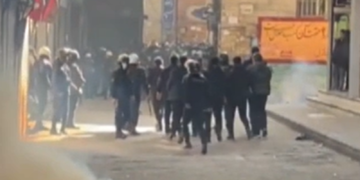























[Iran Faces Nationwide Protests Amid Economic Crisis]
Iran is reeling from widespread anti-government protests, characterized by severe clashes and calls for governmental change, as economic hardships worsen. The rising dissent, now the largest in three years, has prompted the Iranian government to cut off internet access and phone lines, intensifying the atmosphere of unrest.
Why It Matters
The protests reflect a broader struggle against Iran’s theocratic regime, highlighting the citizens’ frustration over plummeting currency value and hyperinflation. As these demonstrations grow in scale and intensity, they underscore the risks faced by the government in maintaining control, while also drawing international attention to Iran’s ongoing economic turmoil.
Key Developments
- Internet connectivity throughout Iran has been largely disrupted, with reports indicating that the government is behind this action to impede protesters’ communication.
- Demonstrators have taken to the streets in major cities, including Tehran, Mashhad, and Isfahan, chanting against the clerical leadership.
- Clashes with security personnel have escalated, resulting in at least 39 reported fatalities and significant injuries amongst both protesters and security forces.
- Exiled crown prince Reza Pahlavi has publicly supported the protests and called for unity against the ruling regime, urging Iranians to assert their demands.
- The rial currency has reached unprecedented lows, exacerbating inflation rates that hover around 40%.
Full Report
Increased Tensions
Protests across Iran reached a boiling point on Thursday night, forcing citizens into the streets with chants such as "death to the dictator" and "death to the Islamic Republic." Reports indicate significant unrest, particularly in the capital, Tehran, where demonstrators clashed with security forces.
In response to the burgeoning protests, the Iranian government enacted a nationwide internet blackout, as cited by internet monitoring organizations. This measure coincides with ongoing economic challenges that have sparked unrest, primarily stemming from the rial’s significant devaluation and rising inflation.
Call for Action
Reza Pahlavi, the exiled crown prince, has galvanised support among demonstrators, declaring “the last battle” for the return of a monarchy. His statements have resonated with protesters, who have echoed sentiments of wanting a change in governance.
This wave of demonstrations began in late December when merchants in Tehran’s Grand Bazaar protested against the deteriorating monetary situation. As the protests gained momentum, violence intensified, leading to tragic reports of death and injury.
Government Response
Despite escalating violence, Iranian officials have largely downplayed the situation. President Masoud Pezeshkian warned local suppliers against price gouging, emphasizing his commitment to ensuring adequate goods for citizens.
Context & Previous Events
The current protests are the most extensive in Iran since 2020, fueled by economic distress and deep dissatisfaction with political leadership. The time frame follows the historic collapse of the rial, which exchange rates indicate has fallen to 1.4 million for $1. Furthermore, ongoing sanctions and the repercussions of a short-lived conflict with Israel have compounded Iran’s economic woes, prompting widespread rallies across the nation.
As these developments unfold, the world remains watchful of the Iranian populace’s plight and their calls for substantive change within the regime.