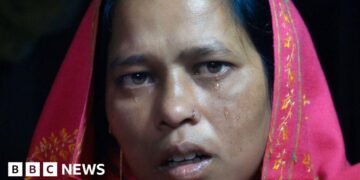























Involuntary Divisions: Pregnant Indian Woman’s Deportation to Bangladesh Sparks Outrage
A heavily pregnant woman from West Bengal, Sunali Khatun, has returned to India after being deported to Bangladesh amid allegations of illegal immigration. Her case has drawn significant criticism and raises concerns about the treatment of Bengali-speaking Muslims in the ongoing crackdown by Indian authorities.
Why It Matters
This incident highlights the tensions surrounding immigration policies in India, particularly affecting marginalized communities. It also raises questions about human rights, legal processes, and the impact of the government’s actions on families, further complicating the already contentious relationship between India and Bangladesh.
Key Developments
- Sunali Khatun, 25, was deported to Bangladesh in June along with her husband and son on suspicions of being illegal immigrants, later spending over 100 days in jail.
- The West Bengal government has condemned the deportation, claiming it was executed without proper due process.
- Reports indicate that in May, over 1,200 individuals were deported, emphasizing a surge in similar cases.
- India’s Supreme Court has intervened, allowing Khatun and her son to return on humanitarian grounds.
- Khatun’s husband remains in Bangladesh as she navigates the complexities of her family’s separation and ongoing legal battles regarding her citizenship.
Full Report
The Deportation Experience
Khatun was detained in Delhi alongside her husband, Danish Sheikh, and their eight-year-old son. They were deported without documentation proving their legal status in India. Upon arrival in Bangladesh, they were imprisoned for entering unlawfully. Sunali’s daughter, left behind with relatives during the detention, adds to the family’s stress.
Government Response
The deportation incited a strong backlash from the West Bengal government, which accused the federal Bharatiya Janata Party (BJP) of unjust actions. Officials in West Bengal have argued that the due protocols for verifying suspected illegal migrants were ignored, as authorities failed to consult Khatun’s home state.
The Aftermath in Bangladesh
During their over three-month imprisonment in Bangladesh, Khatun faced severe challenges, particularly as a pregnant woman. She described inadequate conditions in prison, highlighting the lack of basic necessities and expressing fear for her and her child’s wellbeing.
Return to India
Ultimately, India’s Supreme Court ruled in favor of Khatun’s return, allowing her and her son to re-enter the country. She has since been living with her parents in West Bengal, expressing relief about the impending birth of her second child, who will be an Indian citizen by birthright. However, the separation from her husband adds to her anxiety.
Emotional Toll and Future Prospects
Khatun recounts the emotional strain on her family, characterized by video calls with her husband, who often breaks down in distress. Questioning the rationale behind her deportation, she asserts their identity as Indians, stating, "We are not from Bangladesh."
Context & Previous Events
The ongoing crackdown on alleged illegal Bangladeshi immigrants in India is not a recent phenomenon; it has roots in longstanding migration trends between the two countries. With a shared cultural heritage and a porous border of over 4,000 kilometers, West Bengal has frequently witnessed migration, driven by factors such as economic opportunities and religious persecution. Rights activists have raised alarms that recent actions disproportionately target Bengali-speaking Muslims, underscoring concerns about civil rights and governmental accountability.