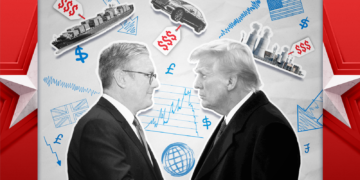























Trade Tensions Rise as Trump Threatens Tariffs on NATO Allies
Concerns over a potential trade war have escalated with President Donald Trump’s recent threats to impose tariffs on NATO allies unless they support his controversial plan to acquire Greenland. Sir Keir Starmer, the UK opposition leader, has publicly opposed retaliatory measures, emphasizing that a trade war benefits no one.
Why It Matters
This development is significant as it underscores the fragile state of transatlantic relations while challenging the economic stability of Western nations at a time when military alliances are under unprecedented strain. Trump’s demands and the potential for retaliatory tariffs not only jeopardize economic ties but also threaten to reshape diplomatic relations between the US and its European partners.
Key Developments
-
Trump’s Tariff Threat: President Trump announced plans for a phased increase in tariffs on NATO countries that decline to back his Greenland acquisition, starting with a 10% tariff on a range of goods from February 1.
-
Increased Rates: This initial tariff could rise to 25% by June if no agreement is reached with the affected countries, which include Denmark, Norway, Sweden, the UK, France, Germany, the Netherlands, and Finland.
-
Market Reactions: Financial markets have reacted negatively to Trump’s statements, with the dollar weakening and European stock markets experiencing declines.
- IMF’s Warning: The International Monetary Fund has cautioned that escalating trade tensions could pose significant risks to the global economy.
Full Report
Trumps’ Greenland Pursuit
The US President’s interest in acquiring Greenland is rooted in its strategic location and abundant mineral wealth. However, both Danish authorities and European leaders have rejected this proposal, affirming that the fate of Greenland is for its inhabitants and Denmark to decide.
Tariff Implications
Trump’s impending tariff plan threatens to affect a wide range of goods exported from Europe to the US. For the UK, which has faced a 10% tariff on most exports since last April, these new charges could inflict further economic strain. Analysis indicates that a worst-case scenario might lower UK GDP by up to 0.75%, potentially nudging the country toward recession.
The chief economist of a prominent economic firm noted that the long-term geopolitical repercussions could influence the UK’s trade relationships—possibly moving it closer to the EU.
Business Sector Responses
In anticipation of unstable trade relations, some UK businesses are adjusting their operations. An automotive parts exporter has announced plans to establish a manufacturing site in the US to decrease dependency on transatlantic supply chains. This shift aims to mitigate the volatility associated with Trump’s tariff threats.
EU’s Position
Currently, the additional tariff rate for EU nations averages 15%. While France has expressed willingness to implement retaliatory tariffs against the US, most European leaders seem inclined to pursue diplomatic solutions to avoid an extended trade conflict.
Context & Previous Events
Trump’s previous trade policies have already strained relations with NATO allies, creating a contentious backdrop for these latest threats. Historically, trade wars have prompted negative financial repercussions, pushing US markets to reconsider harsh measures. The term "TACO," which highlights Trump’s frequent policy reversals, has emerged among market analysts following similar past incidents.