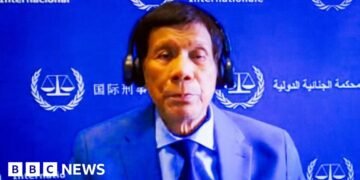























ICC Rules Duterte Fit for Pre-Trial Proceedings in Crimes Against Humanity Case
Judges at the International Criminal Court (ICC) have determined that former Philippine president Rodrigo Duterte is mentally capable of participating in pre-trial sessions related to allegations of crimes against humanity. A hearing is scheduled for February 23 to assess whether the prosecution’s evidence is substantial enough to move forward with a trial.
Why It Matters
This ruling has significant implications for the Filipino populace and international observers alike, as it underscores the ICC’s commitment to ensuring that justice is served in cases involving serious human rights violations. The decision also emphasizes the importance of victims’ voices in legal proceedings, amid ongoing debates about Duterte’s controversial legacy.
Key Developments
- ICC judges concluded that Duterte, 80, can exercise his procedural rights effectively.
- The hearing on February 23 will evaluate the strength of the prosecution’s case against him.
- Duterte’s legal team had previously claimed he suffers from “cognitive impairment,” making him unfit for trial.
- He has been in custody in The Hague since March 2025.
- Critics, including Congresswoman Leila de Lima, praised the ruling as a victory for victims’ rights.
- Duterte remains a polarizing figure in the Philippines, despite ongoing criminal allegations.
Full Report
The ICC’s ruling comes after a panel of medical experts provided opinions to the judges regarding Duterte’s mental state. The judges expressed satisfaction that he is capable of participating in pre-trial proceedings, asserting that the intellectual capacities necessary for a fair trial do not need to be at their highest level. This decision is politically and socially significant, as it assures victims and their advocates that their grievances will be addressed within the judicial process.
During his presidency from 2016 to 2022, Duterte implemented a controversial war on drugs, resulting in the deaths of numerous alleged drug offenders. His justification for these actions centered around restoring peace and order as a prerequisite for economic growth. Critics argue that his crackdown was a guise for widespread human rights abuses.
Since his arrest during March 2025, Duterte has polarized opinions in the Philippines, garnishing support from those who appreciate his tough approach to crime, while facing condemnation from various civil society groups for his government’s violent tactics. Despite his incarceration, he continues to hold influence, having been elected as mayor of Davao City while in prison. His daughter, Vice-President Sara Duterte, is anticipated to seek the presidency in upcoming elections, adding another layer of complexity to the political landscape in the Philippines.
Context & Previous Events
Rodrigo Duterte was detained at an airport in Manila in March 2025 amid diminishing support for his family’s ties with the current Philippine president, Ferdinand “Bongbong” Marcos Jr. Duterte’s administration has faced substantial backlash for its actions during his war on drugs, with various legal challenges arising on both domestic and international fronts. Congresswoman Leila de Lima, a vocal critic of Duterte, was imprisoned during his administration on drug-related charges, which were later declared baseless.