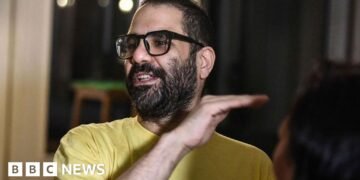























Controversial Tweets Drive Calls for UK Citizenship Revocation of Activist Alaa Abd El Fattah
Alaa Abd El Fattah, a British-Egyptian democracy activist recently freed from an Egyptian prison, is facing intense scrutiny after old tweets resurfaced that express extremist views. Amid mounting pressure from political leaders in the UK, there are calls for Abd El Fattah’s citizenship to be revoked, sparking a heated debate over the implications for free speech and public safety.
Why It Matters
The case underscores the complex intersection of human rights advocacy, national security, and public sentiment. Abd El Fattah’s reentry into the UK following a bitter imprisonment raises questions about the vetting process for individuals who have previously endorsed violent rhetoric. The situation also highlights the ongoing discussions around the responsibilities of both the government and citizens regarding free expression and accountability.
Key Developments
- Apology Issued: Abd El Fattah issued an apology for the offensive tweets, acknowledging their shocking content.
- Political Backlash: Conservative leader Kemi Badenoch and Reform UK leader Nigel Farage have called for the Home Secretary to explore Abd El Fattah’s potential deportation.
- Labour Leaders Respond: Some senior Labour MPs are also advocating for revoking Abd El Fattah’s citizenship.
- Foreign Office Reaction: The UK Foreign Office has condemned the resurfaced posts but stated that securing Abd El Fattah’s release was a priority.
- Concerns from Jewish Community: The Board of Deputies of British Jews expressed deep concern regarding Abd El Fattah’s past statements, labeling them as threatening to the Jewish community in the UK.
Full Report
Apology and Response
Following the emergence of historic tweets calling for violence against certain groups, Abd El Fattah expressed deep regret, stating he was taken aback that those messages resurfaced just as he reunited with his family after 12 years. He emphasized that he takes allegations of antisemitism seriously, while asserting that many of his remarks have been "misinterpreted" and "twisted out of their meaning."
Political Reactions
Political leaders from various parties have reacted strongly to the situation. Home Secretary Shabana Mahmood has been urged to evaluate whether Abd El Fattah’s actions warrant citizenship revocation. Farage articulated that such statements reflect "racist and anti-British views," adding that those espousing hate should not be permitted entry into the UK.
Labour leader Sir Keir Starmer faced criticism for celebrating Abd El Fattah’s arrival, having reportedly been unaware of the concerning tweets.
Legal and Ethical Considerations
Dame Emily Thornberry emphasized that Abd El Fattah is a British citizen by right and criticized the government for needing to adhere to international law, which dictates that citizenship cannot be revoked in a manner that leaves individuals stateless. Shadow Home Secretary Chris Philp remarked that Abd El Fattah’s previous comments lack justification and called for citizenship revocation to maintain public safety.
Reactions from Advocacy Groups
Human rights advocates who campaigned for Abd El Fattah’s release in light of his imprisonment have expressed concern over the backlash. While acknowledging that some of his remarks were inappropriate, Abd El Fattah contended that his statements regarding LGBTQ+ rights were misrepresented. He previously paid a high personal cost for his support of those rights.
Context & Previous Events
Alaa Abd El Fattah was convicted in 2021 in Egypt on charges of "spreading fake news," a verdict widely criticized by human rights groups as unjust. He was granted UK citizenship in December 2021 through his British mother. Abd El Fattah’s prominence rose during the 2011 protests that led to the ousting of former Egyptian president Hosni Mubarak. His struggle for freedom saw a renewed campaign from family members and the UK government, culminating in his recent release.