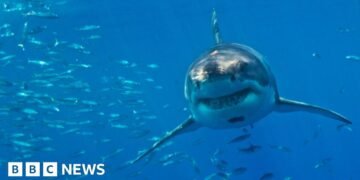























Great white sharks are facing critical threats in the Mediterranean Sea due to illegal fishing practices, raising alarms among conservationists and scientists. Their existence hangs in the balance as violations of international laws aimed at protecting these species persist.
This alarming trend poses significant ecological risks, as the great white shark is a vital predator in marine ecosystems. Researchers from Virginia Tech and the UK-based Blue Marine Foundation are working to understand the threats to this species, which is classified as Critically Endangered by the International Union for the Conservation of Nature.
Key Developments
- Over 40 great white sharks were killed in North African waters in 2025 alone.
- Footage verified by BBC shows captured protected shark species being sold in local fish markets.
- The researchers monitored fishing ports to assess illegal catch levels and their impact on shark populations.
- Despite extensive efforts to study shark dynamics, researchers failed to tag any sharks during their mission in the Strait of Sicily.
- Conservationists stress the need for immediate action to preserve remaining shark populations.
Full Report
According to researchers, great white sharks are not the only species at risk. Currently, more than 20 Mediterranean shark species have protected status under international law, which prohibits their capture or sale. Despite this, evidence suggests widespread illegal fishing contributes to their population decline.
Dr. Francesco Ferretti, the lead researcher from Virginia Tech, highlighted the intense fishing pressure in the Mediterranean, a situation he described as unmatched globally. “The impact of industrial fishing has been intensifying… and it’s plausible that they will go extinct in the near future,” he warned during a field study off the coast of Sicily.
During the investigation, the team intended to place satellite tracking tags on great white sharks, a feat never accomplished in the region. Their strategy involved deploying over three tons of fish bait to attract the predators, yet their search yielded minimal success—only a brief sighting of a blue shark was recorded.
Footage from North Africa corroborated the alarming findings, showing great white sharks and other protected species arriving dead at fish markets. With the sharks being sold in countries like Algeria and Tunisia, the enforcement of protective regulations remains inconsistent, complicating conservation efforts.
James Glancy from Blue Marine remarked on the paradox that despite the illegal trade, the presence of sharks indicates that wildlife still exists, suggesting a possibility for recovery if swift action is taken.
The stark reality faced by fishers in impoverished North African communities further complicates the situation. Many may inadvertently catch sharks while seeking to provide for their families. Sara Almabruk from the Libyan Marine Biology Society emphasized the need for support and education in sustainable fishing practices to deter the capture of vulnerable shark species.
Context & Previous Events
The international community recognizes 24 shark species as threatened, including great whites and short-finned makos. Agreements among the EU and 23 Mediterranean nations prohibit the capture and sale of these species, asserting they must be released unharmed when encountered. However, challenges in enforcement and bycatch regulations continue to threaten these populations.