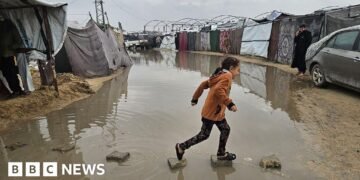























Heavy Storms Threaten Gaza Amid Stalled Peace Efforts
More than 800,000 residents of Gaza face imminent flooding risks as severe winter storms devastate the region. The adverse weather conditions are exacerbating an already dire humanitarian situation, leaving many families homeless and awaiting reconstruction efforts.
Why It Matters
The situation in Gaza illustrates the intersection of natural disasters and political complexities, further complicating the peace process and humanitarian aid. As the region grapples with both flooding and ongoing political tensions, the stakes remain high for affected families who confront both immediate dangers and long-term displacement.
Key Developments
- Severe rains have led to flooding and the collapse of structures in Gaza, critically impacting already displaced families.
- The UN reports that over 800,000 Gazans are at risk from the relentless storms.
- Many families, like that of Ghadir al-Adham, are living in tents and facing emotional distress over their precarious living conditions.
- Political negotiations regarding hostages remain stalled, affecting the potential progression of peace efforts and reconstruction plans.
- Israeli Prime Minister Benjamin Netanyahu has insisted that all hostages must be returned before advancing to the next phase of the peace plan.
Full Report
Humanitarian Impact of the Storms
The recent winter storms have severely affected Gaza, with heavy rainfall leading to flooding in refugee camps and the collapse of multiple buildings. Families, still recovering from previous conflicts, are left vulnerable to the harsh weather. Ghadir al-Adham, who lives with her husband and six children, described their living situation as one of “humiliation,” expressing a desperate need for solid homes instead of tents.
Political Stalemate
Two months into a ceasefire brokered by the U.S., Gaza remains caught in a complex political landscape, with territories divided and communities displaced. The peace plan, initially proposed by former President Donald Trump, is stalled, particularly due to ongoing concerns surrounding hostages—specifically Ran Gvili, a police officer captured during earlier military confrontations.
Gvili’s parents, Talik and Itzik, express frustration over the lack of information regarding their son’s fate. They believe Hamas might be using him as leverage in political negotiations. In contrast, a Hamas official refutes these claims, stating that Israel is avoiding fulfilling its obligations.
Netanyahu has pledged that no progress will be made until all hostages are accounted for, complicating the next phase of negotiations that might require significant concessions from both sides.
Challenges Ahead
The next phase of Trump’s peace plan is fraught with challenges for both Hamas and Israel, with Israel apprehensive about ceding security responsibilities and Hamas wary of losing control over its areas. Retired General Israel Ziv indicates that the current hesitance of both parties may hinder timely progress, potentially allowing Hamas to strengthen its position.
Netanyahu has voiced skepticism regarding the feasibility of foreign forces managing security in place of Israeli troops, underscoring the complexities involved in transitioning to a new stabilization era in Gaza.
Context & Previous Events
The conflict in Gaza has remained ongoing, deeply rooted in a history of territorial disputes and humanitarian crises. This current ceasefire, prompted by international pressure, marks an attempt to stabilize the region, though previous agreements have often faltered due to underlying tensions, hostage negotiations, and political dynamics that continue to evolve.