






















Hope Amidst Chaos: Gaza’s Struggle for Normality
The people of Gaza yearn for a return to normalcy — bustling shops, operational hospitals, and children back in school. However, amidst recent celebrations of hope, the stark reality of ongoing conflict looms large, raising questions about the region’s fragile peace and security.
Why It Matters
This situation underscores not just the human toll of the conflict but also the complexities of governance and regional stability. As diplomatic efforts aim to reshape Gaza’s future, any missteps could exacerbate existing tensions and prolong suffering for its residents.
Key Developments
- A mass wedding in Khan Younis saw 54 couples unite in a rare celebration amidst the devastation.
- Israeli military sources report injuries to five soldiers from alleged Hamas attacks launched from tunnels.
- Subsequent Israeli airstrikes have resulted in civilian casualties, reinforcing the cycle of violence.
- The Rafah Crossing will temporarily open to allow exits from Gaza, although Egypt’s conditions for reciprocal entry have stalled progress.
- The killing of militant leader Yasser Abu Shabab indicates Hamas’s ongoing influence, contrary to perceptions of its weakening.
- Efforts for a coordinated U.S. response to peace and reconstruction in Gaza are ongoing, although major hurdles remain.
Full Report
Celebration Amidst Despair
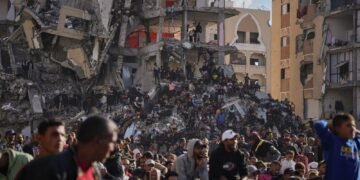
In an extraordinary display of resilience, 54 couples gathered for a mass wedding ceremony in Khan Younis, bringing bursts of color and joy to the devastated landscape. Crowds gathered, climbing on the ruins of a nearby building to partake in the celebration, symbolizing a collective desire for hope in a region torn apart by violence.
Violence and Retaliation
The recent tumult in Gaza highlights a persistent cycle of violence. Days prior, the Israeli military reported injuries to five soldiers resulting from an ambush by Hamas fighters. Israel’s immediate response involved airstrikes targeting a senior Hamas official, which resulted in civilian deaths, further inflaming tensions. As the cycle of violence continues, the prospects for peace seem increasingly daunting.
A Stalemate at the Rafah Crossing
The Rafah Crossing is set to reopen, allowing limited movement out of Gaza; however, disagreements between Israel and Egypt over facilitating two-way traffic have led to a diplomatic impasse. Egypt has conditioned its assistance on mutual movement. This deadlock complicates not just logistics but also the humanitarian situation for Gaza’s residents.
Ongoing Tensions and Control
The recent killing of Yasser Abu Shabab, a rival militant leader opposed to Hamas, underscores the group’s resilient grasp on power. Analysts suggest that this incident reveals that, rather than being undermined, Hamas is reasserting its authority, complicating any potential disarmament or governance transition.
Future Uncertain
With the return of the remains of the last known hostage lingering on the horizon, many questions surround the future governance and stability of Gaza. U.S. efforts are underway to support the transition towards recovery and disarmament, but many obstacles remain, including the significant military presence of Israeli forces and the precarious situation of local governance.
Context & Previous Events
The situation in Gaza has deteriorated over recent years due to continuous conflict and political strife. The complexity of local factions, namely Hamas and other militant groups, coupled with foreign influence and military oversight, has created a fragile environment for any potential peace initiatives. Recent events highlight the cyclical nature of violence and the ongoing struggle for normalcy among the populace.