






















Children Return to Makeshift Classrooms in Gaza After War
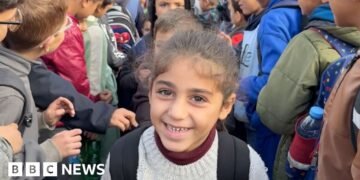
In the aftermath of extended conflict, children in Gaza have begun returning to school in makeshift tents, signaling a tentative step toward normalcy. With over 97% of educational facilities damaged or destroyed, these students are experiencing a stark new reality, learning in informal settings under challenging conditions.
Why It Matters
The restoration of education in Gaza highlights the resilience of its young population amidst ongoing strife. As schools reopen—albeit in a limited capacity—their importance transcends mere academic lessons, offering students a sense of stability and hope. However, the dire educational landscape raises significant concerns about the long-term effects of sustained trauma and disrupted learning for an entire generation.
Key Developments
- Over 97% of schools in Gaza were damaged during the recent war, as confirmed by UNICEF.
- The Lulwa Abdel Wahab al-Qatami School has resumed classes in tents, accommodating 1,100 students in three shifts.
- Most subjects taught are basic, covering Arabic, English, mathematics, and science.
- Many students have experienced significant trauma, with over 100 losing one or both parents during the conflict.
- Limitations in educational supplies are exacerbated by restrictions on aid entering Gaza.
Full Report
Classes Amid Chaos
In Gaza City, children are once again echoing the sounds of learning, albeit in new makeshift classrooms fashioned from canvas tents. This unconventional setting has emerged following a ceasefire that paused hostilities in October, allowing for a fragile return to education in the Tel al-Hawa neighborhood. For students like 14-year-old Naeem al-Asmaar, this marks a renewed commitment to education after enduring profound personal loss and displacement.
Naeem recalls the difficulties of the war, which took his mother in an airstrike, and speaks candidly about the disruption of his schooling. “I missed being in school a lot… Now it’s tents. We only study four subjects. It’s not the same, but being here matters,” he expressed. As he walks with classmates into the classrooms, there’s an evident longing for the structure and friendships that school once provided.
The Role of UNICEF
The makeshift school is operated by UNICEF, which has taken steps to restore a sense of normalcy for children affected by the conflict. However, the educational offerings are limited, focusing on core subjects rather than a comprehensive curriculum. Dr. Mohammed Saeed Schheiber, the school’s principal, highlighted the stark contrast to pre-war education, where students had access to proper facilities and resources. Currently, the school operates under severe constraints, with only 24 teachers available for the growing number of students.
“It’s a determination to compensate our students for what they lost,” Schheiber stated, in reference to the challenges faced by both students and teachers. Psychological trauma is widespread, and school counselors work diligently to support students grappling with their experiences. Yet, the need for mental health resources significantly outstrips available support.
Struggles of the Parents
Parents are relieved but anxious about their children’s return to education. Huda Bassam al-Dasouki, a mother of five, expressed her concerns over the lack of resources for her children, who now face educational gaps exacerbated by the war and the COVID-19 pandemic. “Basic supplies have become unaffordable,” she remarked, highlighting the financial strain families face while trying to provide for their children’s educational needs.
Moreover, UNICEF representatives acknowledge the worsening situation due to restrictions on essential supplies entering Gaza. They have been advocating for increased access to educational materials, mental health tools, and recreational resources for children.
Context & Previous Events
The recent conflict in Gaza saw extensive damage to civilian infrastructure, with many schools repurposed as shelters for those displaced by the war. UNICEF reports that around 658,000 school-aged children in Gaza have faced nearly two years without formal education. The struggle continues as the humanitarian situation remains tense, with ongoing restrictions impacting delivery of essential supplies, affecting education and well-being for countless families in the region.