






















Limited Travel Resumes at Gaza’s Rafah Crossing Amid Ceasefire Progress
Gaza’s Rafah border crossing with Egypt reopened on Sunday for limited travel, marking a significant development as Israel moves forward with a ceasefire agreement with Hamas. This reopening is a crucial phase for the humanitarian situation in Gaza after years of near-total isolation.
Why It Matters
The resumption of activity at the Rafah crossing offers hope for thousands of Palestinians, many of whom are in dire need of medical assistance. The ability to enter and exit Gaza could pave the way for humanitarian aid and contribute to stabilizing the region, particularly after years of conflict and isolation.
Key Developments
- Israel announced a trial opening of the Rafah crossing, managed by COGAT, the military agency responsible for aid regulation.
- Palestinian officials confirmed that travel in both directions would commence Monday, pending completion of operational preparations.
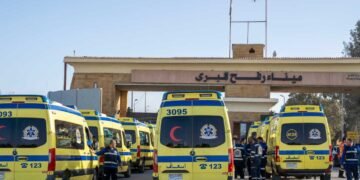
- Ambulances and Palestinian security personnel crossed into Egypt to facilitate the EU’s supervision of the crossing.
- Approximately 20,000 Palestinians are awaiting medical evacuations, while many others outside Gaza hope to return.
- Israel plans to allow 50 patients daily to leave Gaza, each permitted to bring two relatives, while also allowing 50 previously evacuated individuals to return.
- The Rafah crossing has been largely closed since its seizure by Israel in May 2024, in efforts to combat arms smuggling.
Full Report
Reopening Details
On Sunday, the Rafah crossing saw a flurry of activity, with ambulances lined up and Palestinian security officials moving through to assist in managing the border traffic. The new regulations will be supervised by European Union agents, ensuring safety and compliance in a delicate situation.
The head of the Palestinian administrative committee governing Gaza announced the start of travel services on Monday, although no goods will be permitted to cross initially. An Egyptian official, speaking anonymously, confirmed that the preparations are in place for the phased reopening.
Medical Evacuations
Health officials in Gaza reported that no formal notifications had been received regarding the initiation of medical evacuations. Prime Minister Benjamin Netanyahu indicated that Israel is prepared to allow up to 50 patients per day for medical treatment outside Gaza.
Historical Context
The Rafah crossing has been a pivotal point for Palestinians, historically functioning as the primary gateway to the outside world. However, after being seized by Israel in May 2024, its closure severely restricted movement, especially for medical emergencies.
This reopening follows a U.S.-brokered ceasefire agreement that began on October 10, 2023. Under its terms, the crossing is expected to gradually open further, depending on the success of the initial phase.
Ceasefire Background
After more than two years of conflict ignited by a Hamas-led attack on Israel in October 2023, the truce aims to address urgent humanitarian needs and temporarily redeploy Israeli forces. Progress into the next phase involves establishing a new Palestinian governance model for Gaza, disarming Hamas, and rebuilding war-torn areas.
Context & Previous Events
The Rafah crossing was momentarily opened in early 2025 for the evacuation of medical patients during a brief ceasefire. Israel’s military actions, designed to limit Hamas’s capabilities, have shaped the current landscape of access and security at the border.
The renewed negotiations and eventual partial reopening of Rafah symbolically represent a pivotal shift in the relationship between Israel and Palestine, offering potential pathways to de-escalation and recovery in the region.






