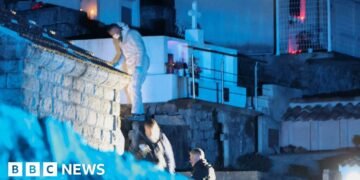























Tragedy at a Corsican Funeral: Former Nationalist Leader Killed in Shooting
The murder of Alain Orsoni during his mother’s funeral has shocked the small Corsican village of Vero and raised serious concerns about the ongoing violence tied to organized crime on the island. The incident signifies an alarming trend in Corsica, where gang-related killings have become distressingly commonplace.
Why It Matters
This tragic event highlights the spiraling violence that has gripped Corsica, underscoring the island’s complicated history with nationalism and organized crime. With a population of just 350,000, Corsica has witnessed a rising murder rate that raises questions about safety and governance in French territories. Orsoni, a prominent figure in Corsican nationalism, was not only a known leader but also deeply intertwined with the criminal elements that have plagued the island.
Key Developments
- Alain Orsoni, 71, was shot dead at his mother’s funeral in Vero.
- The murder marks a striking escalation in Corsican violence, with thirty-five fatalities reported in recent years.
- Orsoni was cremated following a large police-regulated funeral service in Ajaccio.
- Experts believe this assassination could trigger further retaliatory violence.
- Investigations are being led by judges from Paris specialized in organized crime.
Full Report
The Incident
During the funeral service for his mother, Orsoni was shot from nearby scrubland, dying immediately on site. The shooting stunned the mourners, with many locals expressing disbelief that such violence could erupt in a sacred space like a cemetery. Close friend Jo Peraldi remarked on the unprecedented nature of the event, labeling it intolerable.
The Context of Violence in Corsica
Corsica has experienced a surge in violent incidents related to mafia-like activities, prompting experts to analyze the transformation of local nationalistic movements into organized crime factions. Thierry Dominici, a specialist in Corsican nationalism, noted the shift from seeking autonomy to engaging in lucrative criminal enterprises, capitalizing on the French state’s failure to curb these activities effectively.
Public Reactions
Corsican authorities have responded forcefully, with Gilles Simeoni, the region’s highest official, lamenting the increasing mafia influence over society. Against this backdrop, Cardinal François Bustillo, the bishop of Ajaccio, has called for a halt to the cycle of violence, urging communities to reject retribution and change prevailing attitudes.
A Troubled Legacy
Orsoni’s own history adds more layers to this tragedy; he was previously imprisoned for bomb attacks aimed at advancing Corsica’s autonomy. His life was marred by violence, having experienced numerous assassination attempts and familial loss due to clan warfare. Recently, he had relocated to Nicaragua, yet remained a significant figure in local sporting culture, having once led the AC Ajaccio football club.
Context & Previous Events
Over the past three years, Corsica has seen thirty-five murders, contributing to one of the highest murder rates in France. The island’s violent history includes numerous killings that have claimed the lives of politicians, business leaders, and local residents as rival clans vie for power. Orsoni’s lineage is closely associated with Corsican nationalism and criminal activities, adding a complicated dimension to his assassination.