






















New York City’s Mayor Mamdani Faces Significant Hurdles to Implement Ambitious Agenda
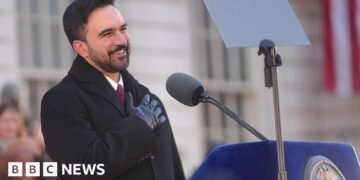
Newly inaugurated Mayor Zohran Mamdani of New York City has promised an extensive reform agenda centered on safety, affordability, and social equity, but he faces considerable obstacles in realizing these ambitious goals. As he embarks on his term, the 34-year-old’s charted course is fraught with financial, political, and public safety challenges.
Why It Matters
Mamdani’s tenure as mayor represents a shift toward progressive governance in the nation’s largest city. As he tackles critical issues such as housing, childcare, and public safety, the efficacy of his approach will not only shape the future of New York but could also influence broader trends in municipal governance across the United States.
Key Developments
- Mamdani outlined a reform agenda promising universal childcare, free public transportation, and city-operated grocery stores during his inauguration.
- Funding for his ambitious proposals remains uncertain amid existing city and state budget challenges, with some initiatives requiring higher taxes on the wealthy.
- Despite initial hostility from business leaders, some have begun to engage constructively, although their support hangs on Mamdani’s fiscal strategies.
- Public safety remains a pivotal concern, with Mamdani planning to establish a new Department of Community Safety to enhance mental health services and crisis response.
Full Report
Policy Ambitions Amid Financial Constraints
Mamdani’s vision for New York City includes freezing rent hikes on subsidized housing and providing free childcare. Experts indicate he may fulfill certain promises independently, such as appointing supportive members to the city’s rent control board. However, ambitious proposals like free public transit and childcare require significant funding, complicating their implementation in a city facing financial shortfalls. Government analysts highlight that overcoming these fiscal hurdles will demand substantial cooperation with the state government and potential tax reforms.
Seeking Support While Navigating Political Terrain
Following a barrage of criticism from former President Donald Trump during the mayoral campaign, the initial meeting between Mamdani and Trump was surprisingly amicable. While they exchanged pleasantries, differing policy perspectives, particularly on immigration, may pose challenges for collaboration. Mamdani has committed to preserving New York as a welcoming city for immigrants, reflecting his dedication to inclusivity, which could exacerbate tensions given the federal administration’s tougher stance on immigration enforcement.
Engaging Business Leaders
Insiders from the business community reacted with anxiety to Mamdani’s ascent. Some organizations previously threatened to withdraw from New York in light of his policies. Nonetheless, Mamdani has made strides in engaging with business leaders. He has actively sought dialogue with figures like JPMorgan Chase CEO Jamie Dimon and real estate mogul Jeffrey Gural, who have expressed a willingness to offer support if their concerns are addressed. Still, skepticism remains regarding Mamdani’s inexperience and potential tax increases, which might prompt wealthier individuals and companies to leave the city.
Tackling Public Safety Challenges
With crime rates having fluctuated especially during the pandemic, public safety presents yet another complex issue for Mamdani. He’s proposed the creation of a Department of Community Safety designed to invest in mental health initiatives and community outreach. However, some experts argue that previous efforts aimed at addressing homelessness and mental health have fallen short, complicating Mamdani’s path forward. The former mayor’s decision to retain Police Commissioner Jessica Tisch indicates a strategic approach, acknowledging the necessity of effective policing in maintaining public trust—critical for the long-term success of his administration.
Context & Previous Events
Mamdani’s electoral victory in November stunned many and underscored a growing trend toward progressive leadership in urban areas. His promises during the campaign resonated particularly in a city grappling with high living costs and social inequities. The newly elected mayor faces the dual challenge of delivering results while reconciling the often conflicting interests of various stakeholders, from business leaders to citizens reliant on public services.