






















[article_title]
Four individuals were killed during a recent U.S. military strike on a suspected drug boat in the eastern Pacific Ocean, marking a significant escalation in the ongoing efforts against drug trafficking in the region. This incident represents the first strike of its kind after nearly three weeks of no attacks and raises pressing questions about the legality of these operations.
Why It Matters
The U.S. military’s engagement in operations targeting alleged drug traffickers has drawn scrutiny amid concerns about adherence to legal and ethical standards in military conduct. The mounting death toll in these actions, particularly the recent attack on a vessel tied to suspected narcotics, underscores the intensifying war on drugs spearheaded by the Trump administration, further complicating U.S.-Venezuela relations.
Key Developments
- The recent strike destroyed the 22nd suspected drug trafficking vessel in ongoing military operations.
- U.S. Southern Command labeled the deceased as “four male narco-terrorists,” asserting intelligence supported the claim of illicit drug transport.
- Concern over the attacks has grown, prompting investigations into earlier military decisions.
- The legality of killing survivors in the strikes has been called into question by legal experts and lawmakers.
Full Report
Details of the Strike
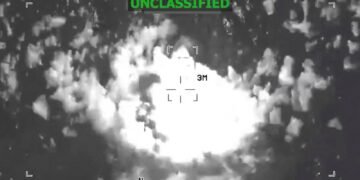
The U.S. military conducted the strike on a small boat in the eastern Pacific, part of a broader strategy against drug trafficking routes that also extend to the Caribbean Sea. Video footage of the incident shows the vessel being engulfed in flames after a large explosion. Southern Command’s statement identified those killed as individuals involved in narcotics trafficking.
Controversy Surrounding Military Actions
This strike marks an escalation in a campaign that has already resulted in a reported 87 fatalities. Lawmakers have raised ethical concerns, particularly regarding a previous incident on September 2, where accusations emerged that U.S. Navy Admiral Frank “Mitch” Bradley ordered a follow-up strike against survivors of an earlier attack. While Defense Secretary Pete Hegseth allegedly demanded these actions, Bradley denied any inappropriate orders were given.
Lawmakers Weigh In
In closed-door briefings in Washington, conflicting accounts have emerged about the legality and morality of the strikes. Different responses from lawmakers illustrate a partisan divide; some Republican representatives assert the strikes were justified while Democrats expressed outrage, describing the consequences of these military actions as “deeply troubling.” Prominent Democratic figures recounted distressing details about incapacitated individuals being targeted after their vessel was destroyed.
Context & Previous Events
The investigation into military operations began after the first strike on September 2, near Venezuela. This attack prompted concerns regarding the orders issued and the decision-making process surrounding military actions against drug trafficking. Legal experts have pointed out that the U.S. Department of Defense’s Manual on the Law of War explicitly prohibits attacks on individuals who are incapacitated or no longer pose a threat.