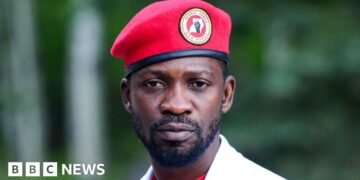























Bobi Wine Faces Off Against Museveni in High-Stakes Ugandan Election
Music superstar-turned-politician Bobi Wine is gearing up for a second challenge against long-time President Yoweri Museveni in Uganda’s impending presidential election, scheduled for January 15. Known for his grassroots support and youthful charisma, Bobi Wine’s electoral bid highlights ongoing struggles against a political landscape dominated by decades of military rule.
Why It Matters
The outcome of this election could significantly alter Uganda’s political landscape, which has been characterized by President Museveni’s 40-year grip on power. Bobi Wine has emerged as a symbol of hope for many young Ugandans facing high unemployment and social injustices. His campaign therefore embodies not just a personal quest for leadership but also a broader movement aimed at propelled democratic reform in the nation.
Key Developments
- Bobi Wine, whose real name is Robert Kyagulanyi Ssentamu, has gained immense popularity among young Ugandans as the “ghetto president.”
- Despite several arrests and legal challenges perceived as politically motivated, he remains undeterred in his campaign.
- During the 2021 election, he received 35% of the votes, a significant figure but still far behind Museveni’s 59%.
- International musicians have supported Wine, notably in petitions for his release from politically charged arrests.
- The upcoming election has seen increased tensions, with protesters routinely facing violent crackdowns from security forces.
Full Report
Bobbi Wine’s Rise in Politics
Bobi Wine has evolved from a popular musician to a formidable player in Uganda’s political arena over the past decade. He has garnered significant attention for championing issues like youth unemployment and human rights. His identification as the “ghetto president” is steeped in his humble origins in Kampala’s slums, aiming to resonate with the demands of a youth-dominated demographic.
Challenges and Controversies
Since entering the political fray, Bobi Wine has faced increasing resistance, including imprisonment and other legal battles. In 2018, he was held on firearm possession charges widely viewed as politically motivated. Further treason charges were later dropped, painting a complicated legal landscape for the opposition leader.
Campaign Strategy and Focus
With a campaign steeped in issues of corruption and social justice, Bobi Wine continues to engage the electorate with vigor. As he traverses the country while often wearing protective gear due to threats from authorities, his supporters display unwavering loyalty, facing risks of violence to attend his rallies.
Responses from Authorities
The Ugandan authorities have consistently denied any political motivations behind the repeated arrests of Wine and his supporters, framing their actions as necessary to maintain law and order. Museveni has accused the opposition leader of inciting violence, claims Bobi Wine has publicly rejected.
Context & Previous Events
When Museveni first ascended to power in 1986, Bobi Wine was just a child. His family’s historical link to numerous political upheavals resonates with many Ugandans, highlighting the generational shift as Bobi Wine stands against a leader who has clung to power for four decades. In the 2016 elections, while many in the music industry sided with Museveni, Wine publicly broke ranks, signaling a shift in the cultural sphere towards activism and political expression.
Despite losing the 2021 election, Bobi Wine’s influence only grew, culminating in a National Geographic documentary, “Bobi Wine: The People’s President,” which garnered international attention and an Oscar nomination.