






















Doumbouya Set to Become Guinea’s Elected President After Controversial Rise to Power
Mamadi Doumbouya, the former military leader who seized power in a coup in September 2021, is poised to be inaugurated as Guinea’s elected president this Saturday. At 41 years old, Doumbouya’s transformation from a broad-shouldered colonel in military fatigues to a civilian leader has drawn both support and skepticism from the public and political commentators.
Why It Matters
Doumbouya’s election represents a critical moment for a nation grappling with political instability. His rise from a military coup to a democratically elected position raises questions about the future of democracy in Guinea, the legitimacy of the electoral process, and the ongoing concerns of human rights violations under his regime.
Key Developments
- Inauguration Date: Doumbouya will be sworn in as president on Saturday.
- Election Results: He won 87% of the vote in December’s election, which critics describe as flawed.
- Opposition Concerns: Key political rivals are either banned or in exile, raising doubts about fair electoral competition.
- Human Rights Issues: Activists and journalists have disappeared under suspicious circumstances, prompting calls for accountability.
- Public Perception: Despite controversies, Doumbouya enjoys a degree of popular support, with trust in his leadership reportedly increasing.
Full Report
Election Overview
In December 2024, Doumbouya secured a commanding victory with 87% of the vote against a weakened opposition. Critics, including ex-Prime Minister Cellou Dalein Diallo, labeled the election a "charade," citing a highly restricted political environment. Reports of political oppression, including the banning of rival parties and the mysterious disappearances of activists, have raised alarm about the status of democracy in Guinea.
Doumbouya’s Image Shift
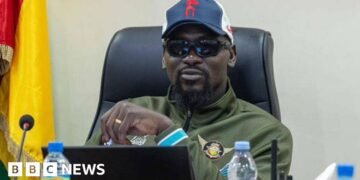
Since taking power, Doumbouya has carefully cultivated a public image that distances him from his military roots. No longer always seen in military attire, he often sports casual wear, such as baseball caps and traditional boubous, to project friendliness and accessibility. Observers believe this shift aims to portray him as a leader of the people rather than a military figure.
Beverly Ochieng, a senior analyst at Control Risks, noted that Doumbouya’s image adjustments reflect an attempt to align himself with civilian governance, attempting to suppress the coup narrative that propelled him to power.
Handling of Resources
Under Doumbouya’s leadership, Guinea is witnessing a significant shift toward resource nationalism. The launch of the Simandou iron-ore mine, as well as the government’s cancellation of numerous contracts deemed unfavorable, are positioned as moves to secure greater benefits for the country’s citizens. Analysts assert that these actions contribute to his growing popularity among the populace, framing him as a protector of national interests.
International Relations
Doumbouya’s government is marked by a pragmatic approach to foreign relations. Unlike many coup leaders in West Africa, he has neither fully rejected France, his former colonial ruler, nor aligned himself with Russia. This diplomatic stance appears designed to solidify his image as a sovereign leader genuinely concerned with Guinea’s autonomy.
Context & Previous Events
Since the coup in September 2021, Doumbouya has faced scrutiny over his governance while simultaneously benefiting from a backdrop of public enthusiasm for the overthrow of former President Alpha Condé, whom he accused of undermining democratic principles. The political landscape remains tense, with ongoing reports of dissent silenced and opposition leaders either marginalized or in exile. The absence of key challengers and the alleged suppression of dissent cast doubts over the validity and fairness of Doumbouya’s election, which some argue reflects a broader problem of governance in the region.