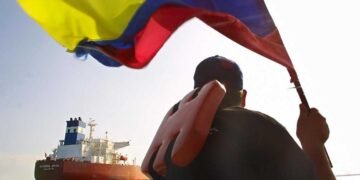























U.S. Military Operation Targets Venezuela’s Oil Wealth Amid Capturing of Maduro
In a momentous shift, the U.S. military has captured Venezuelan President Nicolás Maduro, reigniting discussions about the strategic significance of Venezuela’s oil reserves. President Trump has positioned this military operation as a pathway to reinvigorate the country’s ailing oil infrastructure through substantial investment by U.S. oil companies.
Why It Matters
Venezuela is home to the largest proven oil reserves globally, yet its production has plummeted in recent years. With global oil markets teetering amid fluctuating prices and an oversupply, the opportunity to reclaim and revitalize Venezuela’s oil sector could hold significant economic implications—both for Venezuela and for American energy interests. However, a turbulent political landscape raises concerns about the viability and sustainability of such investments.
Key Developments
- President Trump announced plans for U.S. oil companies to invest in Venezuela’s oil infrastructure following the military’s capture of Maduro.
- Historically, Venezuela was a top oil producer, but current output has dwindled to about one million barrels per day.
- Venezuela’s oil is classified as heavy and requires specialized refineries, making it less appealing compared to lighter, cleaner alternatives found in neighboring Guyana.
- U.S. oil companies have previously faced substantial financial losses in Venezuela, complicating potential future investments.
- Experts indicate that political instability remains a major barrier for oil companies considering re-entering the Venezuelan market.
Full Report
The Oil Reality in Venezuela
Once a thriving producer in the global oil market, Venezuela has seen its output drop drastically over the years, producing only around one million barrels daily compared to over three million in the 1990s. This sharp decline places Venezuela at roughly 1% of the world’s oil output, significantly trailing behind the U.S., which produces about 13 million barrels per day.
Historically, many U.S. oil companies like Chevron have operations in Venezuela, with the company currently producing approximately 25% of the nation’s oil. However, the political climate has pushed many companies, such as ExxonMobil and ConocoPhillips, to withdraw their investments and seek compensation through international arbitration due to unfavorable contract renegotiations initiated by late President Hugo Chávez.
Investment Opportunities and Challenges
The prospect of U.S. oil companies reinvesting in Venezuela could serve as an opportunity to recover some of the funds lost due to unpaid debts. However, experts caution that the current oversupply of oil and environmental concerns tied to Venezuela’s heavy, pollution-inducing crude may deter companies from re-entering the market. Additionally, the ongoing political turbulence complicates commitments from potential investors, who require certainty regarding governance and legal frameworks to secure their contracts and operations.
Regional Considerations
While Venezuela grapples with its internal challenges, neighboring Guyana is emerging as a key player in the oil market with recent discoveries of more than 10 billion barrels of oil. Guyana’s oil is lighter and less polluting, making it more attractive for investment, particularly from companies that have climate commitments. The safety and stability of operations in Guyana further enhance its appeal relative to Venezuela.
Context & Previous Events
Historically, Venezuela was a founding member of OPEC and established itself as a powerful entity in the oil industry. However, interventions by the U.S. in Latin America and the Middle East have often led to unpredictable outcomes. The current shift in the political landscape following Maduro’s capture adds another layer to Venezuela’s complicated history with international oil investments, as many investors remain wary of the risks posed by a potential lack of stable governance.






