






















South Africa’s Police Minister Acknowledges Ongoing Struggles Against Gang Violence
South Africa’s Police Minister Firoz Cachalia has candidly stated that security forces are currently incapable of overcoming the nation’s entrenched criminal gangs, highlighting the severe crime crisis plaguing the country. This admission sheds light on the complexities of gang violence that, along with widespread robberies, contributes significantly to South Africa’s alarmingly high homicide rate.
Why It Matters
The acknowledgment by Cachalia is critical for understanding the broader implications of gang violence in South Africa, particularly in areas like the Eastern and Western Cape. With high stakes involved, including public safety and trust in law enforcement, the government’s inability to tackle organized crime raises questions about the effectiveness of current strategies and resources in maintaining order.
Key Developments
- Cachalia emphasized that gang violence has become increasingly complex, requiring new strategic approaches beyond traditional law enforcement.
- He reported that gangs in the Eastern Cape and Western Cape are in a “killing spree,” contributing to a steady rise in violent crime.
- An average of 63 murders occur daily in South Africa, with a noticeable spike in homicides in regions like Nelson Mandela Bay.
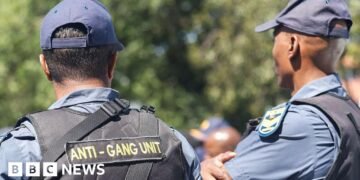
- Despite the formation of an anti-gang unit in 2019, Cachalia expressed concern that the gangsters appear to be prevailing in this ongoing struggle.
- President Cyril Ramaphosa has pledged to intensify law enforcement and police efforts to combat the violence, particularly in gang-afflicted areas.
Full Report
Minister’s Statement and Current Challenges
During a recent media briefing, Cachalia did not shy away from the harsh realities regarding gang control. He remarked, “I do not believe that we are currently in a position to defeat these gangs,” underscoring the depth of the challenge faced by South African police. His comments followed a visit to the violence-stricken Nelson Mandela Bay, where authorities have grappled with rampant gang activity.
An Escalating Crisis
The statistics paint a grim picture, with local data indicating that 118 lives were lost between August and December of the previous year, largely due to gang-related violence. The trend of violence has not slowed, as January alone saw approximately 40 murders in the region.
Illegal Firearms and Gang Influence
In South Africa, licensed firearms exist in abundance, with three million legally owned weapons reported. However, the prevalence of at least the same number of illegal firearms compounds the issue, creating a volatile environment. The South African Gunowners’ Association has brought attention to this stark disparity, noting the dangerous implications for public safety.
Government Response
Amidst these soaring crime rates, President Cyril Ramaphosa has promised to bolster law enforcement efforts. Increased police deployment has been discussed as a necessary step to regain control over regions heavily impacted by gang activity.
Context & Previous Events
This escalation in violence is not an isolated incident. Gang-related activities and associated homicides have been a persistent issue within South Africa, a nation noted for one of the highest homicide rates globally. The establishment of an anti-gang unit in 2019 demonstrated a government attempt to address the problem, yet the ongoing prevalence of organized crime suggests a need for more effective and sustained interventions.