






















Federal Immigration Tensions Escalate in Minnesota Amid Controversial Policing
In the wake of widespread protests following two fatal shootings of U.S. citizens by federal agents, President Trump has enacted a leadership overhaul within Minnesota’s immigration enforcement operations. The move comes as critics highlight the growing tensions between federal agents and local communities, raising concerns about the appropriateness and effectiveness of their responses.
Why It Matters
The recent reshuffle of leadership in Minnesota’s immigration enforcement is significant as it captures the escalating conflict between federal authorities and local citizens. The controversy underscores broader issues regarding the training and tactics used by federal agents, with calls for accountability and increased scrutiny of law enforcement practices amid civil unrest.
Key Developments
- President Trump replaced Operation commander Gregory Bovino with Border Czar Tom Homan after protests escalated.
- Critics, including sociologist Irene Vega, argue that federal agents lack the necessary skills for urban policing.
- Former police officials contend that federal agents are exacerbating conflicts rather than diffusing them.
- Governor Tim Walz criticized federal agents for neglecting essential immigration enforcement tasks.
- President Trump indicated he would consider reducing the number of federal agents in Minnesota following a call with Walz.
Full Report
Leadership Reshuffle Amid Tensions
In response to mounting community anger over recent federal actions, President Trump has dismissed Gregory Bovino as the commander of the operation and appointed Tom Homan to take his place. Protests proliferated after two U.S. citizens were shot by federal agents, amplifying scrutiny on the immigration enforcement strategies in urban settings.
Concerns About Agent Training
Experts like Irene Vega have voiced concerns about the suitability of the federal officers deployed in Minnesota. Vega points out that the agents, largely from Customs and Border Protection (CBP), may lack experience in urban policing and crowd control, primarily having been trained for border enforcement. “The skills that these federal immigration agents are bringing to these cities are a complete mismatch for what we actually need,” she stated.
Use of Force and Public Safety
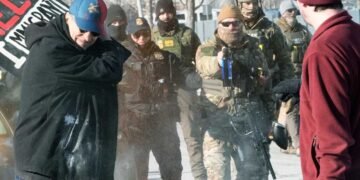
Recent incidents indicate that the use of force by federal agents, particularly the reliance on pepper spray, has intensified confrontations with protesters. Leon Taylor, a retired police officer, emphasized the responsibility that comes with using incapacitating measures, warning that harm could come from a lack of duty of care. Other officials have noted that escalating tactics contribute to a deteriorating atmosphere for safety.
Local Perspectives
Governor Tim Walz expressed concern over the federal agents’ focus, claiming that critical arrests were being overlooked while agents are preoccupied with managing protests. “It’s their job to do immigration and customs enforcement. It’s law enforcement’s job to do law enforcement in Minnesota,” he remarked during a public statement.
Federal Viewpoints
CBP commissioner Rodney Scott defended the agency’s approach, attributing the challenges to unfamiliar dynamics in urban environments where local communities are actively protesting immigration arrests. He described the situation as a complex challenge for agents who are not accustomed to such interactions.
Context & Previous Events
The recent federal actions and community backlash come in the context of growing scrutiny over CBP’s use of force, particularly regarding incidents involving deadly force along the U.S.-Mexico border. In 2013, an external review prompted recommendations for improved use of non-lethal measures, including the introduction of pepper spray into their operational protocols. This evolution in policy has sparked significant debate on its ramifications for urban policing.






