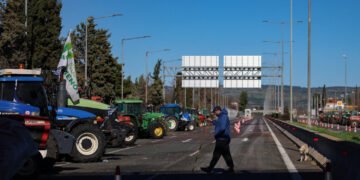























Farmers Protest EU Trade Deal Amid Rising Costs in France and Greece
Farmers in France and Greece took to the streets Thursday, using tractors to block essential roads and highways in a massive demonstration against the European Union’s proposed trade agreement with five South American countries. The protests underscore the escalating tensions as farmers voice concerns that the deal could jeopardize their livelihoods while burdening them with mounting production costs.
Why It Matters
The protests are a significant indicator of discontent among European farmers, who argue that the EU-Mercosur agreement could lead to increased competition from cheaper imports, threatening local agriculture and economic stability. With agriculture serving as a critical component of both French and Greek economies, the stakes could have wide-reaching implications for food production and rural employment in these nations.
Key Developments
- French farmers drove approximately 100 tractors into Paris, gathering in front of the National Assembly despite heavy police presence.
- In Greece, farmers initiated a 48-hour blockade of major highways, demanding increased governmental support amidst rising agricultural costs.
- Farmers are particularly concerned about the potential impact of the EU-Mercosur agreement, which includes Brazil, Argentina, Bolivia, Paraguay, and Uruguay.
- The protests have been fueled by earlier grievances related to subsidy fraud and livestock disease outbreaks.
- French Agriculture Minister Annie Genevard reaffirmed the government’s opposition to the trade deal, citing risks to various agricultural sectors.
Full Report
French Farmers Take to the Streets
In the heart of Paris, farmers set up encampments, parking their tractors in front of the National Assembly, as they called for a stronger stance from President Emmanuel Macron regarding the contentious trade deal. Ludovic Dupeux from Corsica, who joined the protest via tractor, urged Macron to stand firmly with the agricultural community. "We want him to clearly voice our concerns and take necessary actions," he stated.
Despite a government ban, about 20 tractors appeared throughout central Paris, including at notable landmarks such as the Arc de Triomphe and the Eiffel Tower. According to the Interior Ministry, some tractor convoys managed to bypass barricades and reach key traffic arteries.
Escalation in Greece
Simultaneously, Greek farmers escalated their protests by blocking crucial highways connecting Athens and Thessaloniki. Farmers like Yiannis Baritas expressed their desperation, emphasizing, "We’ll stay here as long as it takes to support our families." They are primarily protesting the rising costs of production—which farmers argue are exacerbated by government policies and a subsidy scandal.
Vangelis Roubis, a protest organizer, poignantly stated that if the trade agreement were to be enacted, it could spell disaster for Greek agriculture, which relies heavily on domestic production without the industrial backing seen in larger EU nations like Germany and France.
Government Response
The Greek government announced some concessions aimed at mitigating the unrest, including plans to lower electricity rates for farmers and provide fuel tax rebates. However, many farmers remain dissatisfied, feeling these measures are inadequate in addressing their pressing challenges.
In France, the Rural Coordination union, which organized the protests, stressed the need for quick and effective government responses to ongoing agricultural issues, such as government measures against livestock diseases that have further strained farmers.
Context & Previous Events
The protests stem from ongoing frustrations since November, when farmers first began to voice their concerns about rising production costs. This unrest has been intensified by a subsidy fraud scandal that delayed essential payments to farmers, as well as a disease outbreak affecting livestock. The EU’s recent internal negotiations regarding the Mercosur trade deal added another layer of urgency to the situation, especially as discussions hinted at a possible signing on January 12 in Paraguay.
In light of these developments, French and Greek farmers have united in their calls for stronger support from their governments against the backdrop of an increasingly challenging agricultural environment.






