






















False Earthquake Alert Sent to U.S. Phones
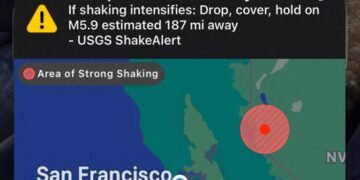
An unexpected earthquake alert advising residents to “drop, cover, hold on” was delivered to mobile phones across the United States on Thursday. However, the alert, which claimed a 5.9-magnitude quake had occurred near Dayton, Nevada, was determined to be entirely erroneous, raising concerns about the reliability of the notification system.
Why It Matters
This incident highlights vulnerabilities in the automated emergency alert system designed to protect citizens from natural disasters. The trustworthiness of such notifications is crucial, especially in earthquake-prone areas, where timely information can save lives and mitigate property damage.
Key Developments
- The US Geological Survey issued a warning about a 5.9-magnitude earthquake near Dayton, Nevada.
- Reports from law enforcement agencies near the supposed epicenter confirmed no signs of shaking or seismic activity.
- This false alert appears to be unprecedented, according to experts from the National Earthquake Information Center and the Berkeley Seismological Laboratory.
- The cause of the erroneous alert remains unclear, with speculation about potential disturbances from human-made activities or natural phenomena.
Full Report
Details of the Alert
The alert buzzed on smartphones across various regions, reaching individuals as far away as San Francisco, approximately 180 miles from the reported epicenter in Nevada. Citizens were prompted to take protective measures, but subsequent investigations quickly revealed no earthquake had occurred.
Expert Opinions
Yaareb Altaweel from the National Earthquake Information Center noted that this is the first instance he is aware of in which the automated system issued an entirely false message. While incorrect information related to exaggerated magnitudes or depths has happened before, such errors were promptly corrected by on-duty seismologists. Similarly, Angie Lux of the Berkeley Seismological Laboratory expressed her surprise at the completely erroneous alert, suggesting possible “noisy triggers” from various sources, including construction, large vehicles, or even natural elements like wind and ocean waves.
Comparative Events
This false alert occurred alongside a legitimate seismic event in the UK, where a 3.3-magnitude earthquake struck northwest England. According to the British Geological Survey, that tremor was felt across several regions, including Kendal and Ulverston in Cumbria.
Context & Previous Events
Previous instances of alerts issued by the automatic system have included incorrect information, but these typically involved exaggerations about magnitude or depth. Experts have indicated that they have never encountered a situation where the system sent out a completely fabricated earthquake notification.






