






















Iran Faces Surge in Protests Amid Brutal Crackdown
Protests in Iran have escalated following violent government reprisals against demonstrators decrying economic hardships. Eyewitness accounts reveal a grim reality, as security forces reportedly used live ammunition on unarmed protesters, igniting international concern over escalating human rights violations.
Why It Matters
The ongoing unrest in Iran represents a significant challenge to the Islamic Republic, which is grappling with both internal dissent and global scrutiny. As citizens voice their grievances against a backdrop of economic distress, the government’s harsh response has led to fears of increased authoritarianism and broader implications for regional stability and human rights.
Key Developments
- Violent clashes reported as security forces fire on protesters in various cities, including Tehran and Fardis, using rifles against unarmed crowds.
- Eyewitness accounts describe horrific scenes, with some protestors killed in alleyways as paramilitary groups acted with impunity.
- The Iranian government has restricted internet access, complicating international reporting and communications from within the country.
- According to reports from the Iran Human Rights NGO, at least 648 protesters have died, but local sources suggest the toll could be much higher.
- The UN has condemned the excessive use of force, with warnings from officials regarding the alarming violence against civilians.
Full Report
Escalating Violence
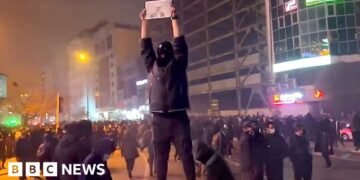
Reports from various Iranian cities indicate a brutal crackdown by security forces following widespread protests that began in response to rising economic hardships. Eyewitness accounts describe harrowing scenes where demonstrators were shot at with live ammunition. One protestor, who spoke anonymously for fear of repercussions, detailed how armed forces targeted crowds indiscriminately in his city, leading to multiple casualties.
Government Response
On Friday, Iran’s Supreme Leader, Ali Khamenei, asserted that the Islamic Republic would not acquiesce to demands from protesters. Subsequent to his comments, eyewitnesses reported an increase in violence, with security forces employing lethal measures. A young woman from Tehran described the day as “bloody,” noting that fear has driven many to protest silently from their homes.
Eyewitness accounts also revealed the involvement of paramilitary forces, identifiable by their uniforms, who reportedly attacked protesters, leading to fatalities in urban neighborhoods. Some witnesses claimed that security personnel were also seen firing at bystanders unconnected to the protests.
Extent of Casualties
International reports, including data from the Iran Human Rights NGO, have documented the deaths of at least 648 protesters, but local estimates suggest that the actual number could be significantly higher. Hospitals across the country are overwhelmed, struggling to treat severe injuries inflicted during the protests. Graphic videos from various sources depict numerous bodies at mortuaries struggling to manage the influx of dead and injured.
Security forces have allegedly demanded payment for the release of bodies, underscoring a troubling dynamic amid the ongoing violence. Some hospitals have reported receiving dozens of bodies daily, raising alarms about the full scale of the crisis.
Global Reactions
The United Nations has expressed grave concern over the use of deadly force against civilians. UN Secretary-General António Guterres and other international officials have called for accountability and emphasized the need for urgent intervention to stop the violence.
Context & Previous Events
This wave of protests follows a series of demonstrations in recent years fueled by economic struggles, political repression, and increased authoritarianism under the current regime. The historical context of discontent is further exacerbated by the legacy of the 1979 Islamic Revolution, which remains a polarizing reference point for many Iranians today.