






















Robot Bouts Showcase Limitations and Progress in Robotics
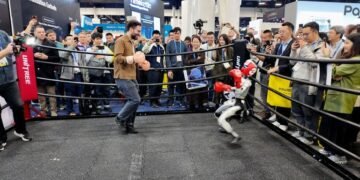
In a striking demonstration at the Consumer Electronics Show (CES) in Las Vegas, a human participant engaged in a spirited yet somewhat one-sided fight against a robot. The event, organized by the Chinese robotics company Unitree, revealed both the capabilities and notable deficiencies of current robotic technology in mimicking human agility and responsiveness.
Why It Matters
As robotics evolve, understanding their limitations and potential is crucial for both developers and consumers. This demonstration highlighted the ongoing challenges in creating robots that can seamlessly adapt to unpredictable environments, a key component in their integration into daily life and functionality.
Key Developments
- A human participant battled a Unitree G1 robot, showcasing its ability to recover from physical hits but emphasizing its lack of agility.
- The event underlined the challenges faced by humanoid robots in achieving the balance and responsiveness inherent in human movement.
- The demonstration served as a reminder that while advancements are being made—such as a laundry-folding robot—many tasks still exceed current robotic capabilities.
- Industry leaders acknowledged the transformative potential of generative AI in refining robotic functionality, although full human-like abilities are still years away.
Full Report
Fight Night Analysis
During the CES event, the participant engaged in physical combat with the G1 robot. Initial attempts to strike proved jarring, likened to hitting a solid wall. However, the human soon found success through kicking, knocking the robot back against the ropes of the ring. Despite the strikes, the G1 robot quickly recovered, epitomizing its design for resilience rather than agility. The participant noted that while the contest lacked true competition, the experience underscored the robot’s limitations in evading blows.
After the bout, the participant evaluated the technological advancements represented by the G1. While capable of standing back up after being kicked, the robot struggled with agility, lacking the nimbleness humans possess. This is partly by design, as developers aim to create a user-friendly experience, allowing the human opponent to feel victorious.
The Road Ahead for Robotics
The ambition for humanoid robots goes beyond simple functions, aiming for a blend of strength, balance, and adaptability. At CES, innovations such as a robot folding laundry showcased significant advancements in dexterity, yet they also highlighted existing limitations. For instance, the laundry-folding robot required extensive adaptation to a new environment, signaling the ongoing challenges of integrating robots into real-world settings.
Moreover, experts from companies like WiRobotics demonstrated advancements in robotic muscle design, marking progress toward achieving a more human-like feel in interactions. Despite these strides, the complexity of human movement remains a significant barrier that has yet to be overcome.
Context & Previous Events
The robotics field has progressed substantially, as evidenced by the recent developments in AI and robotics. While self-driving cars represent a major success in machine learning, the quest for fully functional humanoid robots continues to present formidable challenges. CES 2023 served as a key platform for showcasing both the excitement surrounding robotic innovations and the stark reality of their current capabilities, indicating that while advancements are imminent, the dream of a fully autonomous robot assistant remains a work in progress.






