






















Generational Shifts in Family Planning: American Women’s Evolving Perspectives on Motherhood
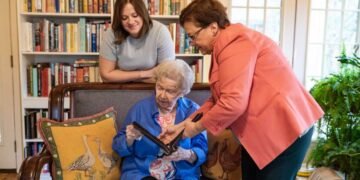
Women in the U.S. today are choosing to have fewer children compared to previous generations, reflecting a broader transformation in societal norms and priorities. This trend is underscored by the personal experiences of three women from the same family, highlighting the different expectations and decisions surrounding motherhood over the decades.
Why It Matters
The decline in birth rates among American women carries implications for economic, social, and family structures. As traditional roles continue to shift, the choices women make regarding family life are increasingly influenced by educational and career opportunities, economic realities, and personal desires.
Key Developments
- U.S. birth rates have dropped to about half of what they were in the 1960s.
- Caroline Brown, 33, reflects generational uncertainty about motherhood, feeling empowered yet ambivalent about having children.
- Her mother, Cynthia Briscoe Brown, 65, recalls a transitional time that allowed for more career opportunities but still held conventional family expectations.
- Barbara Briscoe, 93, represents a generation where motherhood was largely viewed as a primary role for women.
- Economic concerns, such as housing costs and climate change, play a significant role in family planning decisions among younger women today.
Full Report
Changing Perspectives on Motherhood
Caroline Brown, who resides in Charlotte, North Carolina, has found herself at a crossroads regarding motherhood. Reflecting on her upbringing, she stated, "I was very much under the impression that the world was kind of my oyster." Unlike her grandmother, Barbara, who felt her path was predetermined, Caroline feels empowered but uncertain about whether she would like to become a parent.
Conversely, Barbara’s experience in the 1960s was marked by clear societal expectations, with little room for alternate life paths. "It was just accepted at that time that girls were going to grow up and be mothers," she noted, recounting a life where professional careers were seldom discussed. For her, motherhood was a specified script she was happy to follow.
Generational Transitions
Cynthia Briscoe Brown finds herself in a unique position between the two generations. Growing up in a time marked by significant societal changes, she was raised with the idea that women could achieve both career and family aspirations. However, Cynthia also encountered challenges as a working mother. She experienced the pressure of balancing a demanding legal career while raising children, making sacrifices that included hiding her recent childbirth from colleagues to maintain professional credibility.
Despite the advancements her generation experienced, Cynthia remains empathetic toward Caroline’s hesitations about parenthood, understanding that the current societal climate presents its own set of challenges.
Modern-Day Decisions
Caroline’s focus has shifted away from family life toward education and career progression. As a project manager in the food service industry, she reflects on the strong messaging around pursuing passions rather than traditional family roles. Even in her relationship, she chose to communicate her uncertainty about wanting children early on, illustrating a clear shift in how younger women approach long-term commitments.
Both Caroline and Cynthia express concern about the financial implications of raising children today, coupled with larger existential worries about the state of the world.
Context & Previous Events
The evolving roles of women in society have significantly altered over the last century. Barbara was born during the Great Depression, a time that strongly shaped her expectations. Cynthia grew up amidst the feminist movements of the late 20th century, which expanded career opportunities for women. Today, Caroline represents the latest generation, navigating a landscape defined by varying priorities and challenges, contrasting sharply with the prescriptive lives of her grandmother’s era.






