






















Embracing the Dark Side of Christmas: Portland Celebrates Krampuslauf
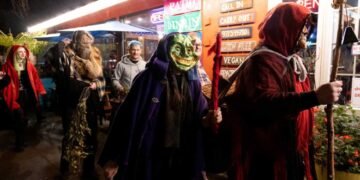
This past weekend, revelers in Portland, Oregon, celebrated the 15th annual Krampuslauf, a whimsical yet eerie nod to the darker aspects of the holiday season. As families gathered for festivities that included traditional German treats and photo ops with the fearsome Krampus, the event highlighted a growing fascination with this folkloric figure amid the jolly trappings of Christmas.
Why It Matters
The Krampuslauf illustrates a cultural shift in how people engage with holiday traditions, blending cheer with a touch of fright. This reimagining of Christmas folklore not only entertains but invites participants to explore themes of morality and the balance of light and dark during the festive season.
Key Developments
- Event Overview: Approximately 150 participants donned Krampus costumes for the parade, celebrating both the holiday spirit and the playful terror associated with the creature.
- Family Activities: Families could be seen taking holiday pictures with Krampus at Fressen Artisan Bakery, juxtaposing festive cheer with the frightening imagery of the folklore icon.
- Cultural Significance: Folklorist Sarah Clegg noted that the emergence of Krampus in its current form reflects centuries of tradition, showcasing the evolution of holiday customs.
- Community Engagement: Arun Joseph Ragan, the event’s organizer, emphasized the cultural importance of acknowledging winter’s darker aspects as a way to create balance during the holiday season.
Full Report
A Frightening Tradition
Edgar Loesch, owner of Fressen Artisan Bakery, recalls his childhood Christmases filled with joy and a hint of terror, thanks to Krampus—the hairy monster who served as a behavioral scare tactic. “You go to bed and suddenly hear scratching at the door,” he reminisced, illustrating how fear can play a role in festive traditions.
Participants of all ages were seen enjoying traditional German holiday treats at the bakery. Families eagerly posed for pictures, some smiling alongside the snarling Krampus while others feigned horror, embodying the spirit of the event. Amid laughter, the occasional child could be spotted bursting into tears, underscoring the whimsical fright that Krampus represents.
The Folklore Behind Krampus
Sarah Clegg, a folklorist and author, explained the origins of Krampus in European tradition. Historically, holiday celebrations involved chaotic processions reminiscent of ancient Saturnalia rituals, where costumed figures sought treats from residents. Over time, figures embodying the darker side of holiday spirits evolved, culminating in the Krampus we recognize today, who became St. Nicholas’s sinister helper.
The rise of Krampus in the late 1800s can be attributed to the popularity of postcards featuring the creature. These cards, made in places like Salzburg, Austria, helped spread Krampus’s notoriety globally.
A Modern-Day Revival
Recent years have seen a resurgence of interest in Krampus across the United States, as evidenced by books, films, and various Krampus-themed events nationwide. In Portland, the festive parade featured not just Krampus but also dancers, holiday music, and the playful distribution of candy rather than punishment—a gentle reminder of the creature’s entertaining role.
Organizing the event for over 15 years, Ragan expressed that he feels more connected to the darker aspects of winter than the cheerful elements of Christmas. "To make peace with winter… by inviting it to your party," he said, emphasizing the value of confronting one’s fears head-on.
Context & Previous Events
The tradition of associating darkness with holiday celebrations dates back to medieval Europe, where various figures, including child-eaters, emerged as part of festive folklore. By the 1500s, these characters began to take on recognizable forms within the context of St. Nicholas celebrations. As Krampus evolved, he became a prominent emblem of this mischievous duality in holiday storytelling, providing a counterbalance to more jovial figures like Santa Claus.






