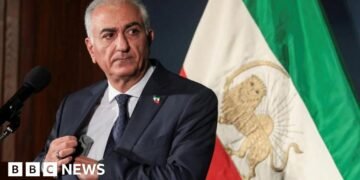























The exiled son of Iran’s last monarch, Reza Pahlavi, declared that the Islamic Republic is destined to collapse, urging the global community to aid protesters in their fight against the current regime. Pahlavi emphasized the importance of targeting Iran’s Revolutionary Guard leadership to minimize further casualties among demonstrators.
This declaration comes amidst significant unrest in Iran, where over 2,500 protesters have reportedly been killed since protests erupted on December 28. These demonstrations, initially sparked by economic grievances, have escalated into widespread calls for the ousting of Supreme Leader Ali Khamenei.
Why It Matters
The ongoing protests represent a critical moment in Iran’s complicated political landscape, reflecting deep dissatisfaction with the government and raising questions about its sustainability. With prominent opposition figures like Pahlavi now calling for international intervention, the situation may challenge existing diplomatic ties and policies in the region, potentially impacting U.S.-Iran relations.
Key Developments
- Reza Pahlavi asserts the Islamic Republic’s inevitable fall, calling on world powers to support Iranian protesters.
- U.S. President Donald Trump warns against the killing of protesters and hints at potential U.S. military involvement.
- Iran’s parliament speaker threatens retaliation against U.S. and Israeli interests should the U.S. attack.
- Pahlavi claims that some Iranian security forces have opted not to suppress the protests, citing the involvement of foreign militia.
- The Iranian government has labeled the protests as “riots” fueled by external enemies.
Full Report
Pahlavi’s Call for Action
During a Washington news conference, Reza Pahlavi articulated his confidence in the fall of the Iranian regime, asserting the need for targeted international action against the Revolutionary Guards. He urged global leaders to impose economic sanctions, expel Iranian diplomats, and increase pressure on Tehran, particularly through enhanced internet access for demonstrators.
Government Response
The Iranian government has violently suppressed protests, which have evolved from economic discontent to fervent opposition against Khamenei’s rule. Pahlavi claimed that Iran’s security apparatus has become divided, with internal factions refusing to engage in violence against their own citizens. He asserted that foreign militia have been deployed to reinforce the crackdown on rebels.
U.S. Reactions
President Trump recently addressed the protests, offering implicit threats of strong action against the Iranian government should it continue to harm demonstrators. He also noted reports suggesting that violence against protesters may have ceased, but he did not exclude the possibility of military action.
Ongoing Clashes
According to the Human Rights Activists News Agency, the unrest has resulted in at least 2,595 deaths, including 17 children and numerous security personnel. The Iranian regime’s response has included imposing comprehensive internet blackouts, making it challenging for journalists and human rights monitors to verify information from within the country.
Context & Previous Events
The current protests began with shopkeepers in Tehran striking against rising living costs and the devaluation of currency but soon transformed into a national outcry against the ruling clerical regime. Protesters have chanted slogans demanding the fall of Khamenei, highlighting widespread discontent with the government’s handling of economic and social issues.