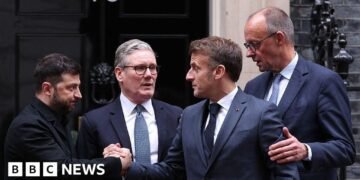























Ukraine’s President Zelensky Engages European Allies Amid U.S. Pressure for Quick Peace Deal
Ukrainian President Volodymyr Zelensky met with key European leaders in London on Monday, as the U.S. strongly encourages swift negotiations for a peace agreement with Russia. The discussions, which included prominent figures like UK Prime Minister Sir Keir Starmer, French President Emmanuel Macron, and German Chancellor Friedrich Merz, are set against the backdrop of mounting geopolitical stakes.
These talks are crucial, not only for Ukraine’s immediate future but also for the broader security landscape of Europe. With concerns about Russian aggression still looming, leaders face a delicate balancing act between ensuring Ukraine’s sovereignty and addressing the expectations of U.S. policymakers.
Key Developments
- Zelensky’s talks in London focus on territory issues and security guarantees with European leaders.
- Starmer emphasized the need for “hard-edged security guarantees” for Ukraine.
- Concerns persist that a hasty peace deal might embolden Russia to threaten other European nations.
- Behind closed doors, European leaders express worries about the U.S. administration’s peace approach.
- Germany’s Merz voiced skepticism regarding details in U.S. peace proposals while acknowledging the need for dialogue.
Full Report
Pressure for Swift Peace
Zelensky’s recent meetings come amid intensified U.S. efforts to expedite a peace deal with Russia. The Biden administration has called for a resolution, yet Europe grapples with the implications of such a hasty arrangement. The critical questions revolve around territorial concessions to Russia and the need for robust security frameworks that would guarantee future respect for any agreements reached.
European Leaders’ Perspectives
Throughout the London meeting, Starmer highlighted the necessity of unyielding security guarantees for Ukraine’s autonomy, insisting that Ukrainians should dictate their own fate without external impositions. He also reiterated that progress in negotiations under U.S. leadership has been the most significant in years.
Although public support for U.S. initiatives remains strong, concerns about a quick fix persist, especially regarding Russian intentions. Recent incidents, including drone disruptions across Europe and sabotage acts, have prompted fears that a mere ceasefire could lead to further Russian aggression beyond Ukraine’s borders.
The U.S.-European Dynamics
As European leaders navigate U.S. expectations, they also confront President Donald Trump’s contrasted historical stances on Ukraine and Russia. Some analysts worry that Trump’s possible return to power could accelerate calls for rapid resolutions, undermining long-term peace prospects.
The current lack of direct aid from Washington complicates the situation, as European nations remain dependent on U.S. intelligence and military support to uphold their own security initiatives. With many European countries struggling with budget constraints and a need to bolster military investments, they tread cautiously, voicing concerns privately while maintaining public support for U.S. leadership.
Context & Previous Events
In its recently published National Security Strategy, the U.S. administration criticized European leaders for allegedly harboring unrealistic peace expectations. Tensions regarding how best to address the ongoing conflict in Ukraine have been evident, particularly as European nations recognize Moscow as a destabilizing force. Meanwhile, ongoing military and security deficiencies limit Europe’s ability to operate independently, highlighting the continent’s reliance on U.S. support.