






















EU Secures Landmark Free Trade Agreement with Mercosur Nations
The European Union (EU) has reached a significant free trade agreement with Brazil, Argentina, Paraguay, and Uruguay, concluding negotiations that have spanned 25 years. This development, coming amid global trade tensions, is being hailed as a pivotal moment for international trade.
Why It Matters
This agreement is not only the largest free trade deal undertaken by the EU but also holds profound implications for both European and South American economies. Supporters argue it will enhance trade relations, while critics express concern over its potential impact on European farmers and local markets.
Key Developments
- The agreement requires approval from the European Parliament within the next few months.
- Brazil’s President Luiz Inacio Lula da Silva called it a “historic day for multilateralism.”
- EU Commission President Ursula von der Leyen stated it would provide “meaningful benefits” for both consumers and businesses.
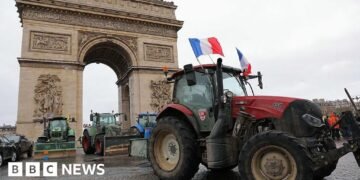
- Farmers in various European countries protested the deal, voicing fears over competition from imported goods.
- The European Commission plans to implement “robust safeguards” in response to farmers’ concerns.
- The trade agreement aims to combat climate change through commitments to prevent deforestation.
- The deal is projected to save local companies approximately €4 billion ($4.7 billion) annually in export duties.
Full Report
A Historic Agreement
The EU has finalized a free trade agreement with the four South American nations as part of the Mercosur trading bloc. This deal was celebrated by leaders from both blocs and is seen as a crucial step toward enhancing international trade during a time of rising protectionism globally. President Lula highlighted its significance as a milestone for multilateral cooperation.
Opposition and Protests
Despite the eagerness from government officials, the agreement has faced significant backlash from farmers across Europe. Protests, including tractor marches in France and Belgium, have taken place as farmers express their anxiety over potential market disruptions caused by an influx of cheaper imports, particularly in sectors like beef, poultry, and sugar. Judy Peeters, representing a Belgian farmers’ group, articulated the widespread frustration, stating, “There is a lot of pain. There is a lot of anger.”
EU’s Response to Concerns
In light of the protests, von der Leyen assured that the EU had taken farmers’ concerns into account, incorporating substantial safeguards within the agreement to help protect their livelihoods. She emphasized that the deal would not only enhance trading partnerships but also contribute to addressing climate change challenges.
Future Prospects
The Commission indicated that the agreement could lead to significant economic advantages, anticipating savings of around €4 billion annually for European companies from reduced export duties. South American nations possess valuable natural resources, including essential minerals for renewable energy technologies, which further augment the significance of this trade pact.
Political Implications
A broad majority of EU member states have expressed support for the agreement, although it still awaits European Parliament approval. Analysts predict a tight vote, with some experts cautioning that the economic impact may be marginal, estimating an increase in EU economic output of just 0.05%. Furthermore, as the agreement will be phased in over a period of 15 years, any economic benefits may not be fully realized until 2040.
Context & Previous Events
Negotiations for the EU-Mercosur free trade agreement began 25 years ago, but have faced various hurdles, including opposition from agricultural sectors within Europe. This deal comes at a time when global trade dynamics are shifting, partly in response to U.S. tariffs and trade policies under the previous administration.