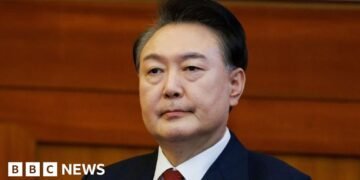























South Korea’s Ex-President Yoon Suk Yeol Sentenced to Five Years for Abuse of Power
The former president of South Korea, Yoon Suk Yeol, has been convicted on multiple charges, including abuse of power and obstruction of justice, related to his controversial martial law attempt in 2024. The court has sentenced him to five years in prison, marking a significant moment in the country’s political landscape.
Why It Matters
Yoon’s conviction highlights a crucial moment in South Korea’s ongoing struggle for democratic governance and accountability. The decision further polarizes the political climate, as the nation grapples with the ramifications of martial law, an act that has drawn both public outrage and support. With three additional trials pending against him, Yoon remains a central figure in a deeply divided society, raising questions about the future of political accountability in the country.
Key Developments
- Charges and Conviction: Yoon Suk Yeol was found guilty of abuse of power, falsifying documents, and obstructing justice.
- Sentence: The court handed down a five-year prison sentence following a year of legal upheaval after Yoon’s martial law declaration.
- Obstruction of Justice: Prosecutors accused Yoon of using state institutions for personal gain and evading arrest during his attempted apprehension by authorities.
- Insurrection Charges: He faces further accusations of insurrection, stemming from his effort to impose martial law without an impending national emergency.
- Ongoing Trials: Yoon is subject to three additional trials, dealing with charges that could carry severe repercussions for his political future.
Full Report
Obstruction of Justice
In a verdict delivered on Friday, Yoon was found guilty of obstructing justice. He did so by avoiding arrest and misusing state power to avoid legal consequences surrounding his martial law declaration. Prosecutors accused Yoon of employing governmental resources to conceal his actions, undermining constitutional checks and balances. The chaotic circumstances surrounding his arrest last January involved over 3,000 police officers attempting to detain him amidst significant resistance from security personnel he marshaled for protection.
Insurrection Charges
Following his martial law declaration, Yoon was charged with insurrection. This legal action occurred after parliamentary moves to impeach him in early 2025. Prosecutors have charged him with trying to thwart constitutional processes by mobilizing police and military forces to seal off the National Assembly. He initially claimed the martial law was necessary to protect the nation from perceived anti-state elements, but investigators have since suggested that political instability motivated his actions.
Aiding an Enemy State
In another serious charge, prosecutors allege that Yoon sought to provoke North Korea into military conflict to provide justification for his martial law decree. Evidence submitted includes potentially incriminating material from a former military intelligence chief’s phone, which indicated a willingness to create an unstable situation in South Korea.
Additional Legal Troubles
Beyond his martial law charges, Yoon faces allegations of perjury related to a testimony he provided during a separate trial. He has also been implicated in obstructing investigations concerning the death of a marine officer and has been accused of making false statements during his presidential campaign.
Public Sentiment
Yoon’s controversial martial law decree and the subsequent legal proceedings have sparked significant public demonstrations, with both supporters and detractors taking to the streets. Observers note that the political climate could become even more volatile, particularly as Yoon’s support base remains devoted to him.
Context & Previous Events
Yoon’s martial law attempt has caused deep political divisions within South Korea. The country has historical precedents involving military dictatorships, such as the cases of former presidents Chun Doo-hwan and Roh Tae-woo, both of whom were convicted of insurrection in the past. This ongoing legal saga and its implications for democratic governance highlight the delicate balance of power in South Korean politics.