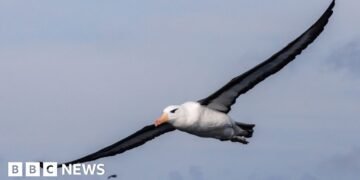























Albatrosses at Risk: Conservation Efforts Combat Bycatch in South African Waters
In the Atlantic Ocean, approximately 27 nautical miles from South Africa’s Cape Point, a unique initiative is underway to protect endangered seabirds like the albatross. Bird watchers aboard a tour boat are not just enjoying a day out; they are witnessing the consequences of fishing practices that pose a threat to these majestic birds.
Why It Matters
Albatrosses, which spend nearly half their lives at sea, face significant risks due to modern fishing methods. The decline in their populations is alarming, with many species threatened by bycatch. Efforts to mitigate this include innovative solutions that not only protect wildlife but also provide economic benefits to local fishing communities.
Key Developments
- Bird watchers in Cape Town embark on excursions to view endangered seabird species, including albatrosses.
- These birds are drawn to fishing trawlers due to discarded fish remains, increasing the risk of accidental deaths.
- Long-line fishing, which uses thousands of baited hooks, poses a direct threat to albatrosses, often leading to their drowning.
- Conservation groups like BirdLife South Africa are working on strategies to prevent seabird deaths, including the deployment of bird-scaring lines.
- Collaborations with local disabled workers aim to produce these lines while providing skills and economic opportunities.
Full Report
Changing Patterns in Fishing
The fishing industry, while crucial for food supply, inadvertently impacts seabird populations. Fishermen often discard fish parts into the sea, attracting birds such as the Atlantic yellow-nosed albatross and the black-browed albatross. As Tim Appleton, a British conservationist, explains, many seabirds become entangled in long lines used to catch large fish, which leads to drowning.
Albatrosses Under Threat
Andrea Angel from BirdLife South Africa highlights that of the 22 global albatross species, 15 are threatened primarily due to fishing activities. Their unique mating habits add to their vulnerability; albatrosses mate for life and raise a single chick every two years. Should one parent be lost due to fishing, the likelihood of the chick’s survival diminishes significantly.
Innovative Solutions
To combat these challenges, bird-scaring lines have emerged as an effective tool. This method involves colorful streamers that deter birds from fishing nets and lines. BirdLife has partnered with the Ocean View Association for Persons with Disabilities, employing disabled workers to produce these lines, thus creating a win-win scenario by aiding both conservation efforts and local economies.
Economic Implications
Angel points out the economic benefits of bird-scaring lines; fishermen prefer catching valuable fish like tuna over dealing with the loss of seabirds. The lines, designed to keep birds away from hooks, can be produced at minimal cost. This has led to a notable 90% reduction in seabird deaths in southern African fisheries since the inception of the Albatross Task Force in 2004.
Context & Previous Events
The Albatross Task Force was established in 2004 to address the critical issue of seabird bycatch in fisheries. Over time, its strategies have proven successful in mitigating accidental bird deaths while fostering collaboration with local fishing communities.
Conservationists hope to extend these successful strategies to other regions, ensuring that future generations of albatrosses can thrive at sea.