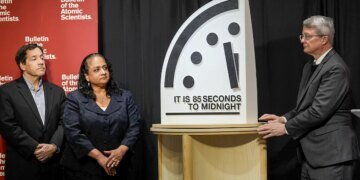























Doomsday Clock Moves Closer to Midnight: Global Risks on the Rise
In a stark warning, the Bulletin of the Atomic Scientists has set the Doomsday Clock at 85 seconds to midnight, the closest it has ever been to the symbolic apocalypse. The group attributes this alarming adjustment to escalating threats including nuclear warfare, climate change, the misuse of biotechnology, and the potential dangers posed by artificial intelligence.
Why It Matters
This unsettling shift signifies a critical moment in global affairs, highlighting the increasing volatility among major world powers and the urgency for international collaboration. With risks mounting and cooperation dwindling, the implications for global security and stability are profound. The clock serves as a vivid reminder that failure to act decisively could lead humanity toward catastrophic consequences.
Key Developments
- Doomsday Clock Update: Clock now set to 85 seconds to midnight, the closest to apocalypse recorded.
- Geopolitical Tensions: Nations including Russia, China, and the United States have adopted more aggressive stances, exacerbating global instability.
- Call for Action: The Bulletin has urged leaders to prioritize efforts aimed at reducing nuclear risk and fostering cooperation in addressing climate change and emerging technologies.
- Historical Context: The clock was last set at 89 seconds in 2025, illustrating an accelerating trend of peril.
Full Report
Rising Global Threats
The Bulletin’s statement reflects concerns over an increase in catastrophic risks worldwide. It criticizes the "winner-takes-all" approach dominating current geopolitical dynamics, which is straining hard-won international agreements. The authors express disappointment over world leaders’ complacency, warning that reckless rhetoric could push society closer to a global catastrophe.
Alexandra Bell, the organization’s president and CEO, emphasized the urgent need for change: "Catastrophic risks are on the rise, cooperation is on the decline, and we are running out of time." She advocates for immediate action from global leaders to address these escalating threats.
Potential Solutions
Despite the grim realities, the Bulletin laid out proposals to move the clock’s hands back from midnight. Key recommendations include:
- Resuming nuclear talks between the U.S. and Russia.
- Strengthening measures to mitigate AI-driven biological risks.
- Expanding U.S. investment in renewable energy.
- Encouraging multilateral discussions among major powers on regulating military applications of AI.
Leadership Responsibility
The Bulletin has stressed that national leaders, especially those in the U.S., Russia, and China, must spearhead efforts to avert impending global crises. The group insists that the responsibility lies not only with leaders but also with citizens, who must compel their governments to act responsibly.
Context & Previous Events
The Doomsday Clock was first established in 1947 and has since served as a barometer of global anxiety regarding impending disaster. The clock has seen various adjustments over the decades, with the furthest distance from midnight being 17 minutes back in 1991, following the conclusion of the Cold War. Prior to the current alarming update, the clock was last set at 89 seconds in 2025, highlighting a deteriorating global situation.
The rising nationalistic autocracies and the proliferation of disruptive technologies compound the issue, leaving humanity increasingly vulnerable and at risk of catastrophe, as noted by Daniel Holz, chair of the science and security board.
As these concerning trends unfold, the global community is faced with pivotal choices that will shape the future of peace and security.






