






















Crisis of Confidence: US Dollar Faces Significant Decline
Amid rising concerns, the value of the US dollar has continued to plunge, recently falling over 11% since former President Donald Trump took office. This decline carries substantial implications for the global economy, foreign trade, and everyday consumers in the United States and beyond.
Why It Matters
The weakening dollar reflects deeper issues of economic instability and uncertainty in US fiscal policy. As the dollar struggles against other major currencies, including the British pound, it raises questions about the dollar’s status as the world’s reserve currency, impacting imports, exports, and inflation rates both domestically and internationally.
Key Developments
- Value Decline: The US dollar fell by 9% against a basket of currencies last year, with a further drop of over 2% in January alone.
- Market Sentiment: Consumer confidence indicators show a shift towards pessimism amidst economic growth.
- Trade Wars: Trump’s tariffs and foreign policy decisions, particularly regarding allies and military actions, contribute to the dollar’s faltering confidence.
- Impact on Foreign Relations: Speculation about coordinated efforts between US and Japanese central banks to support the yen further exacerbates dollar weakness.
- Economic Fallout: A weaker dollar benefits US exports but complicates financial stability as it may provoke a sell-off of US treasuries.
Full Report
Economic Landscape
The US dollar is currently experiencing a crisis of confidence due to a plethora of factors, including political turmoil and expansive government spending, which raises doubts about budget negotiations in Washington. Although the US economy has shown solid growth, fears surrounding the Federal Reserve’s independence and looming government shutdowns have intensified concerns.
Influence of Former President Trump
Since Trump’s return to politics, his trade strategies and international diplomacy have negatively influenced the dollar’s position globally. His statement labeling the dollar’s condition as "great" only seemed to exacerbate its decline. Many analysts speculate that Trump may prefer a weaker dollar to reduce trade deficits, despite the potential dangers associated with selling off US debt abroad, which could increase borrowing costs.
Market Reactions
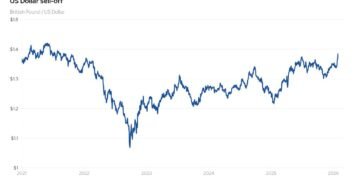
The British pound recently reached its highest level against the dollar since July 2021, driven primarily by dollar weakness rather than any significant gains in the pound’s value. This scenario presents a temporary advantage for travelers heading to the US, as their currency affords them more purchasing power, but it complicates matters for UK exporters facing high tariffs and lower competitiveness.
Potential Risks
Experts warn that the dollars’ decline could lead to adverse consequences for US-based companies, particularly those with dollar-denominated assets. The depreciation threatens returns on investments and could undermine workplace pension schemes reliant on US dollar values.
Context & Previous Events
The issues facing the US dollar can be traced back to escalated trade tensions under the Trump administration. His decisions have sparked apprehensions about fiscal responsibility, particularly regarding the US debt situation and the sustainability of government spending. The ongoing uncertainty in US economic policy continues to fuel volatility in foreign exchange markets, further complicating the dollar’s trajectory.






