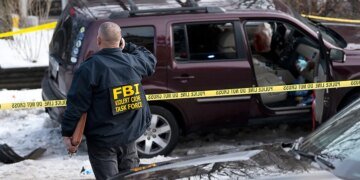























DOJ Shuns Civil Rights Investigation into Minneapolis ICE Shooting
The U.S. Department of Justice has decided not to pursue a criminal civil rights investigation into the shooting death of Renee Good by a U.S. Immigration and Customs Enforcement (ICE) officer in Minneapolis. This decision marks a notable deviation from the typical response to fatal encounters involving law enforcement, raising concerns about transparency and accountability.
Why It Matters
This development is significant as it signals a departure from the Justice Department’s historical practice of quickly launching civil rights inquiries into law enforcement-related deaths. The absence of an investigation may affect public trust and perception of law enforcement accountability, particularly in cases involving federal officers.
Key Developments
- The DOJ confirmed it will not open a civil rights investigation into Good’s killing, as stated by Deputy Attorney General Todd Blanche.
- Federal officials claimed the ICE officer acted in self-defense, characterizing Good’s actions as “an act of domestic terrorism.”
- Significant departures from the Minnesota U.S. Attorney’s office have occurred, with several prosecutors resigning in recent days.
- Minneapolis Mayor Jacob Frey criticized the administration’s handling of the case, defending the prosecutors who resigned.
Full Report
The DOJ announced it is abstaining from a criminal civil rights investigation related to the shooting incident involving Renee Good. Deputy Attorney General Todd Blanche articulated that there was “currently no basis” for such an investigation, marking a significant shift from previous administrations that often responded swiftly to fatal encounters with law enforcement.
Reports indicate that during the incident, Good moved her vehicle toward the ICE officer, who subsequently fired, interpreting the movement as a threat. Officials described her actions as resembling “domestic terrorism.” Nonetheless, the decision to exclude the Civil Rights Division from the investigation has raised eyebrows and prompted worries about the thoroughness of the review process under the current administration.
Further complicating the situation, Minnesota officials alleged that federal authorities hindered state investigators from obtaining crucial evidence, suggesting the state lacks the jurisdiction to conduct its investigation. A DOJ representative emphasized that each law enforcement branch has its investigation protocol, indicating an ongoing parallel investigation by the ICE’s Office of Professional Responsibility.
In the wake of this decision, an exodus of prosecutors from the Minnesota U.S. attorney’s office has been observed, with around six departures, including First Assistant U.S. Attorney Joseph Thompson, who previously supervised significant fraud prosecutions. Mayor Jacob Frey criticized the administration for what he termed an unfair pursuit of justice against Good’s family, branding the resigning prosecutors as “heroes” and denouncing those seeking charges against Good’s widow.
The DOJ denied any link between the resignations and the shooting case, indicating that these individuals had opted for an early retirement program prior to recent events.
Context & Previous Events
Historically, the DOJ has moved quickly to initiate civil rights investigations following fatal encounters involving law enforcement. However, the current administration’s stance has raised questions about its commitment to oversight. Local officials contend that federal intervention has stymied state-level inquiry efforts, adding to concerns about accountability in cases involving federal law enforcement agents.






