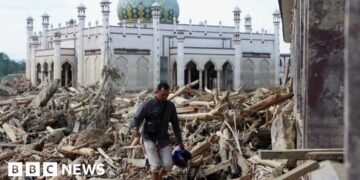























Devastating Floods in Indonesia Leave Over 900 Dead and Thousands Displaced
The recent catastrophic flooding in Indonesia has resulted in more than 900 fatalities, with hundreds of individuals still unaccounted for. A powerful cyclone that emerged over the Malaca Strait last week triggered torrential rainfall and landslides, leading to widespread destruction across the Southeast Asian nation.
This disaster highlights the urgent need for international attention to the growing threat of extreme weather events in Asia, as countries like Sri Lanka, Thailand, Malaysia, and Vietnam face similar situations. The cumulative death toll in these countries has approached 2,000, underscoring the dire implications for the region.
Key Developments
- The death toll in Indonesia has exceeded 900, with many still missing.
- More than 100,000 homes have been wrecked, affecting thousands of families.
- Rescue efforts are ongoing, with some areas accessible only by air due to damaged infrastructure.
- Reports indicate that people are fleeing floodwaters to rooftops in desperate survival situations.
- In some regions, starvation poses a grave risk as food supplies dwindle.
- Looting has been reported at local supermarkets amid the chaos.
Full Report
Impact on Communities
In Aceh Tamiang, one of the hardest-hit regions, residents are recounting harrowing experiences as villages have been entirely submerged. Survivors have described precarious situations where families clung to the rooftops of their homes for survival. One local resident, Fitriana, shared her agonizing ordeal, as she and others were trapped for three days without food or water, relying solely on the roofs of their houses to escape the rising waters.
Another survivor from Gampoeng Dalam Village detailed his family’s narrow escape as water surged into their home, reaching the second floor. With no higher ground available, they sought refuge in an upper-level part of another relative’s house.
Relief Efforts and Conditions
The regional governor noted ongoing recovery operations amidst challenging conditions, as teams wade through thick mud to locate victims. He emphasized the pressing need for essential supplies in areas that remain untouched by aid. “Many people are not dying from the flooding but rather from starvation,” he stated, highlighting the acute humanitarian crisis.
Due to the severity of the flooding, some inmates were released from a prison when rising waters threatened its security, and no alternative facilities were available. Access to Sibolga City and Central Tapanuli was reported as compromised, with relief efforts directed through air and sea routes.
Context & Previous Events
This flooding incident follows a series of extreme weather events across Asia, marking a troubling trend as countries face rising challenges from natural disasters. The cumulative tragedy of the recent events across multiple nations illustrates a growing and urgent need for enhanced disaster response and resilience strategies in the region.