






















Tensions Rise Between Cuba and the U.S. Following Military Operation in Venezuela
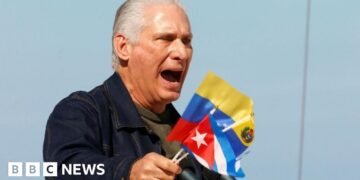
A recent U.S. military operation that led to the ousting of Venezuelan President Nicolás Maduro has sent shockwaves through the Caribbean, particularly in Cuba, where leaders are now facing severe repercussions. Cuban President Miguel Díaz-Canel publicly condemned the U.S. action while mourning the loss of 32 Cuban nationals involved in the operation, highlighting the deep ties between the two nations.
Why It Matters
The stakes are high for Cuba, which has relied on Venezuelan oil to support its struggling economy. The recent military intervention raises concerns about energy security and has the potential to exacerbate the already dire conditions on the island. As the geopolitical landscape shifts, Cuba’s historical ties to Venezuela are under scrutiny, and the implications of U.S. actions could redefine regional power dynamics in the Americas.
Key Developments
- President Díaz-Canel condemned the U.S. operation in Venezuela as illegal and declared national mourning for the deceased Cubans.
- Maduro’s security detail was primarily composed of Cuban personnel, indicating deep-rooted ties between the two nations.
- U.S. sanctions have worsened Cuba’s fuel and electricity crisis, leading to rolling blackouts and widespread suffering among its citizens.
- Critics argue that the U.S. intervention exemplifies a new form of imperialism reminiscent of Cold War tactics.
Full Report
U.S. Military Operation
The U.S. military intervention in Venezuela culminated in the removal of Nicolás Maduro, a move that shocked many and sparked outrage among Washington’s critics. The U.S. government has stated its intentions to impose new conditions on the Venezuelan leadership, demanding compliance from newly appointed acting president Delcy Rodríguez.
Cuba’s Response
In the wake of the military intervention, Díaz-Canel’s administration reacted strongly, calling the U.S. operation a blatant infringement of sovereignty and a violation of international law. This reaction underscores the historical alliance between Cuba and Venezuela, rooted in shared socialist ideologies established by leaders Fidel Castro and Hugo Chávez.
Economic Crisis and Humanitarian Challenges
Cuba is already grappling with its worst economic crisis since the Cold War, characterized by food shortages, electricity outages, and mounting public health challenges. The island has seen a rise in mosquito-borne diseases, further straining its healthcare system, which is struggling to provide adequate care to the population. The potential for reduced Venezuelan oil supplies only makes the situation more precarious.
Context & Previous Events
The close relationship between Cuba and Venezuela dates back to 1999 when Chávez and Castro solidified their partnership through exchanges of oil for medical services. Following the deaths of both leaders, Maduro’s succession was seen as a continuation of their shared political vision. Despite Cuba’s historical denial of a military presence in Venezuela, the reliance on Cuban nationals for security and intelligence has been well-documented.
As the situation in Venezuela evolves, the ramifications for Cuba remain severe, with a future that looks increasingly uncertain amid escalating tensions with the United States.