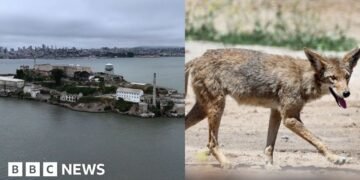























The Resilient Canine: Surviving on an Isolated Prison Island
A remarkable tale of survival has emerged from an isolated prison island, where a dog has adapted to its environment by subsisting primarily on birds. This unexpected turn of events highlights both the resilience of animals in the wild and raises questions about the safety and security of such remote locations.
This incident underscores the often-unforeseen consequences of animals navigating human-imposed boundaries. It calls for an evaluation of the conditions on these isolated sites and our understanding of wildlife in relation to them.
Key Developments
- A dog was spotted on the remote prison island, having swum from a nearby shore.
- The canine has been observed hunting local bird populations for sustenance.
- This situation raises concerns regarding the management and security of the prison facilities.
Full Report
Emergence of the Survivor
The canine’s story began when it swam to the isolated prison island, likely in search of food or safety. Since arriving, it has managed to adapt to its new surroundings, primarily surviving on a diet consisting of local bird species. Eyewitness accounts indicate that the dog has become quite adept at hunting, showcasing its instinctual abilities.
Public Reaction
The presence of the dog on the island has sparked various reactions from the surrounding community. Some residents have expressed concern over the implications of the animal thriving in such a setting, questioning how it could affect the prison’s operations and security protocols.
Implications for Wildlife Management
This incident has opened a dialogue regarding wildlife management in areas adjacent to human structures. Experts stress the need for reevaluating safety measures and considering the ecological impacts on both the animal population and the facility’s security.
Context & Previous Events
Specific prior events leading to the current situation have not been disclosed. However, the presence of wildlife in human-dominated areas is not a new issue and continues to be a topic of discussion among environmentalists and local authorities alike.