






















Tensions Rise in Colombia Amid Calls for Unity Against U.S. Intervention
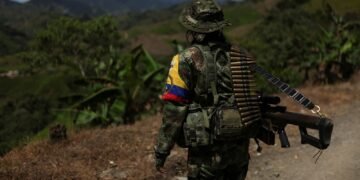
Recent comments from the head of a prominent rebel faction in Colombia have sparked significant concerns about escalating tensions in the region. Nestor Gregorio Lozada, better known as "Ivan Mordisco," has urged various rebel groups to unite against potential U.S. military intervention, especially in light of President Donald Trump’s provocative remarks regarding military action against Colombia.
Why It Matters
The call for unity among rebel factions occurs within a broader context of strained U.S.-Colombian relations. As President Trump threatens military action, the Colombian military’s established ties with the U.S. complicate the situation, raising fears of further instability in a nation still grappling with the aftermath of decades-long armed conflict. The potential for violence looms larger, amid concerns that external intervention may exacerbate internal strife.
Key Developments
- Ivan Mordisco calls for rebel unity to counter U.S. intervention.
- President Trump has expressed support for military action against Colombia, escalating tensions.
- Colombian military maintains a strong partnership with U.S. forces to combat drug trafficking.
- President Gustavo Petro, Colombia’s first leftist leader, faces backlash from Trump’s remarks regarding drug trade.
Full Report
Ivan Mordisco’s Call to Arms
In a recent video, Ivan Mordisco emphasized the need for Colombian rebel groups to rally together to confront U.S. involvement in regional affairs. His statement highlights a growing sentiment of defiance against external intervention, which he views as a direct threat.
President Trump’s Remarks
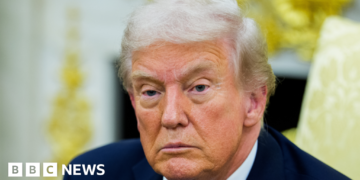
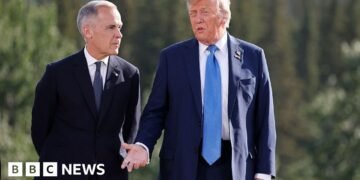
President Trump’s comments, suggesting that a military operation targeting Colombia “sounds good to me,” have drawn sharp criticism and concern. Notably, Trump labeled President Gustavo Petro a “sick man who likes making cocaine and selling it to the United States,” remarks that have amplified domestic unrest.
U.S.-Colombian Military Relations
Despite the troubling rhetoric, the U.S. military has a longstanding partnership with Colombia, which has intensified over recent years despite political differences. Dominique van Heerden, a senior foreign producer at Sky News, noted that while Colombian military forces are actively engaged in combating cocaine production, their Venezuelan counterparts are often accused of facilitating drug trafficking.
The Situation in Colombia
Colombia is no stranger to violence, having endured an armed conflict that has resulted in over 450,000 deaths. Following a contentious peace deal with the FARC rebel group in 2016, sporadic fighting continues between government forces and splinter factions that reject the agreement.
President Petro’s Leadership
As Colombia’s first leftist president, Gustavo Petro was elected in 2022 with promises of achieving "total peace." Despite his progressive agenda, the recent resurgence of violence has prompted alarm from international observers, including Carlos Ruiz Massieu, a UN representative for Colombia. He has warned of deteriorating security conditions in parts of the country, where armed groups exploit the government’s limited presence to exert control.
Context & Previous Events
- Colombia’s armed conflict includes a history of violence between the government and various rebel factions, notably FARC.
- A tumultuous peace deal was reached in 2016, but its implementation remains fraught with challenges.
- President Trump’s controversial remarks about Colombia have introduced new complexities to U.S.-Colombian relations, especially as the political landscape evolves under President Petro’s administration.